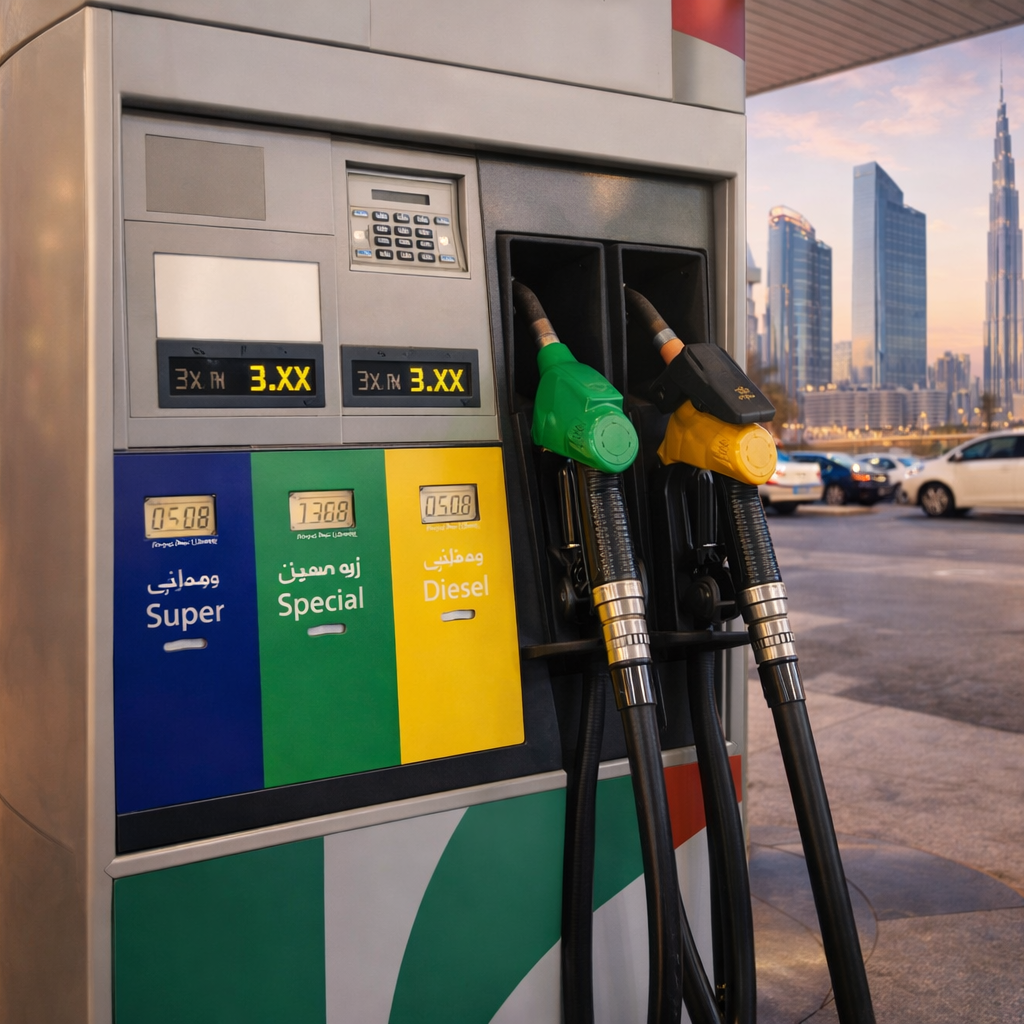
As March 2026 approaches, drivers across the United Arab Emirates are watching closely to see how petrol prices will be adjusted at the pumps. After recent reductions in February, industry analysts and market watchers are forecasting that fuel costs in the UAE could experience an upward shift next month driven primarily by global oil market dynamics and lingering geopolitical tensions.
Recent Price Trends in the UAE
The UAE Fuel Price Committee sets petrol and diesel prices each month based on average international crude oil prices and refined product costs observed over the previous period. In February 2026, motorists welcomed a drop in petrol prices, with the three main fuel grades seeing reductions of around eight to nine fils per litre. At that time, Super 98 petrolwas priced at approximately Dh2.45 per litre, Special 95 at Dh2.33, and E-Plus 91 at Dh2.26. Diesel was also adjusted to Dh2.52 per litre.
These decreases marked a continuation of the monthly pricing system that has been in place since 2015, when the UAE deregulated and aligned its fuel prices with international benchmarks. The system ensures that local petrol and diesel costs reflect global supply and demand conditions, meaning prices can rise or fall depending on crude market movements.
Global Oil Prices: The Key Factor
The most significant factor influencing potential price changes in March is the trend in global oil markets. Late February saw oil prices push higher, largely due to renewed geopolitical risks specifically tensions between the United States and Iran. As global markets price in the possibility of conflict escalation in the Middle East, crude futures have climbed, prompting analysts to suggest that fuel rates in the UAE may follow suit. Brent crude, a key international benchmark, has recently hovered around $71–$72 per barrel, significantly above levels from earlier in February. This rise feeds directly into the fuel pricing formula used by the UAE committee.
Economists describe much of the recent price increase as a “geopolitical risk premium,”meaning the market is valuing crude higher due to the fear of potential supply disruptions, rather than actual changes in physical output. Should these concerns persist or worsen, the premium could continue to support higher oil prices and consequently, higher fuel costs at local pumps.
Predicted Price Direction for March
Given the upward trajectory of global oil prices during the pricing window used to calculate March rates, the most likely outcome is a slight increase in petrol and diesel priceswhen the new list is officially released at the end of February. Many analysts suggest that while a dramatic spike remains unlikely unless geopolitical instability intensifies further, modest increases of a few fils per litre are more probable than continued declines.
This pattern comes after two consecutive months of falling prices, meaning UAE motorists may soon see the first price rise in fuel costs since late 2025. It’s worth noting that because UAE fuel prices are responsive to global trends, any new developments in the oil market such as supply disruptions, shifts in OPEC+ production, or major economic news could still influence the official March announcement.
Impact on UAE Residents and Businesses
For everyday drivers, even a small rise in petrol prices can affect monthly budgets, particularly for those who commute long distances or own larger vehicles with higher fuel consumption. Businesses that rely on transportation from logistics companies to taxi operators may also feel the impact, as incremental fuel cost increases accumulate over time. While petrol remains relatively affordable compared to many international markets, consistency in pricing is crucial for long-term financial planning.
At the same time, the UAE’s fuel prices are still generally lower than in many other countries, especially those with higher taxes or stricter regulatory levies. This relative affordability helps cushion motorists from the full brunt of global oil volatility, even when prices rise slightly.
Why Monthly Adjustments Matter
Tracking monthly fuel price updates in the UAE isn’t just about knowing how much petrol costs at the pump it also offers insights into broader energy market trends. Because the Emirates bases its adjustments on international averages, the local pricing cycles reflect global economic conditions, crude demand forecasts, and market sentiment around geopolitical issues. Consequently, the monthly fuel price announcement becomes a barometer not just for drivers, but for economists and policymakers monitoring global energy trends.
Prices for March 2026 will be officially confirmed by the Fuel Price Committeeat the end of February, as has been customary for many years. Until then, drivers will be closely watching crude markets and geopolitical developments for clues on how rates might shift. However, current indicators suggest that modest increasesin petrol and diesel prices are more probable than further cuts, even if those increases remain moderate.
Looking Ahead
As UAE motorists await the official announcement, industry watchers recommend keeping an eye on daily crude oil movements, as well as broader developments in the Middle East that could impact supply routes or production forecasts. While global markets remain unpredictable, understanding the factors behind monthly pricing decisions can help residents and business owners better anticipate and plan for changes at the pump.