Oil prices climb amid geopolitical uncertainty
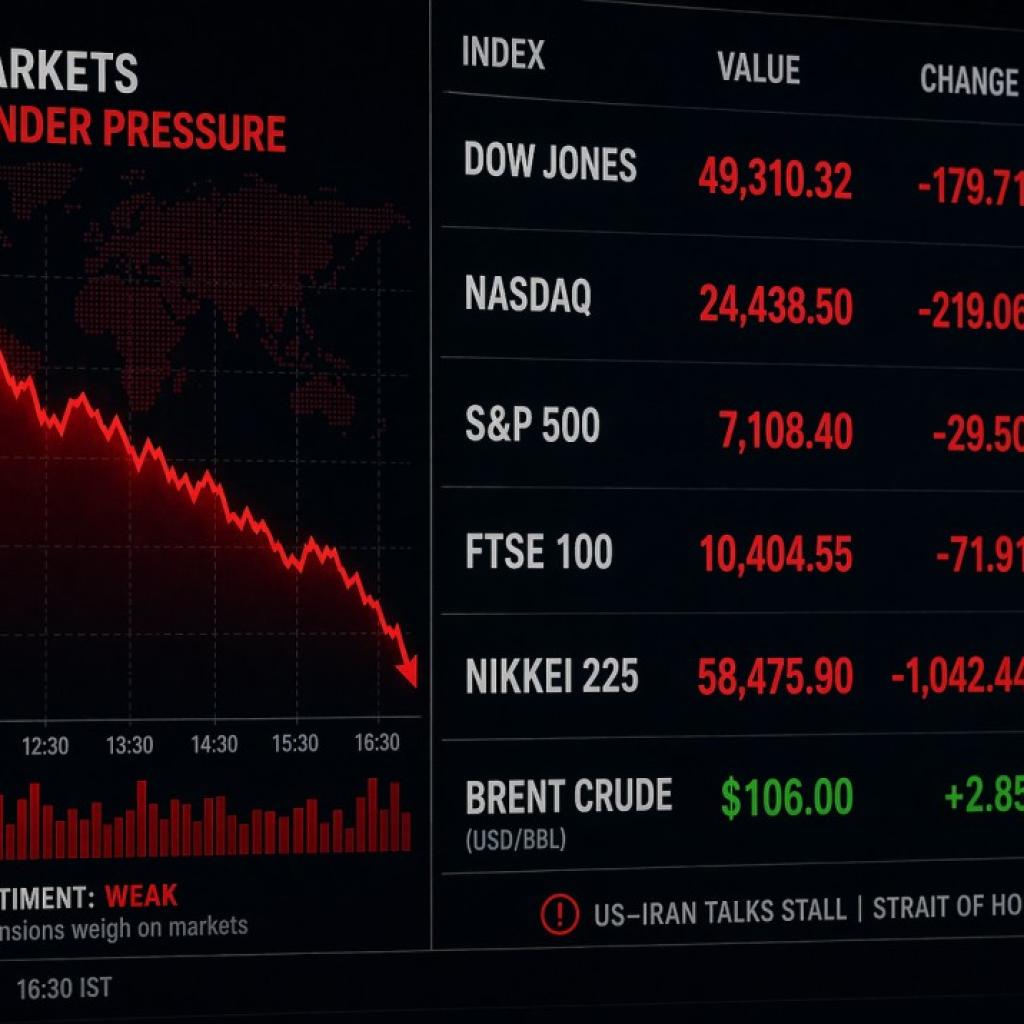
Oil prices moved higher as tensions between the United States and Iran showed little sign of easing. Benchmark crude prices rose, with Brent crossing above $106 per barrel and US crude also gaining, reflecting concerns over supply disruptions.
The increase comes as uncertainty grows around the Strait of Hormuz, a key global shipping route through which a significant portion of the world’s oil passes. Any disruption in this region immediately impacts global energy markets.
Peace talks stall, raising market concerns
Efforts to stabilize the situation through diplomatic talks have stalled, with both sides failing to reach meaningful progress. Despite a fragile ceasefire, there is no clear path toward a long-term agreement.
This lack of progress has weakened investor confidence. Markets had initially reacted positively to hopes of easing tensions, but those expectations have faded quickly as negotiations remain uncertain.
Global stock markets decline
Stock markets across the world mostly moved lower following the latest developments. Investors shifted focus back to rising oil prices and geopolitical risks rather than corporate earnings.
Major indexes in the United States, Europe, and Asia saw declines, reflecting cautious sentiment. Analysts note that high energy costs could slow economic growth and increase inflationary pressure globally.
Strait of Hormuz remains a key risk
The Strait of Hormuz continues to be at the center of the crisis. Iran has indicated it will not fully reopen the passage under current conditions, adding to fears of prolonged disruption.
This route is vital for global oil transportation, and any restriction affects supply chains, shipping costs, and fuel prices worldwide. The ongoing situation has kept traders and policymakers on high alert.
Impact on global economy and inflation
Rising oil prices are not just affecting energy markets—they are also influencing broader economic conditions. Higher fuel costs can lead to increased transportation expenses, which eventually impact consumer prices.
In Europe, business activity has already shown signs of slowing, with economic indicators pointing to contraction as energy costs rise. This adds pressure on central banks and policymakers trying to manage inflation and growth.
Mixed signals from corporate earnings
While some companies have reported strong earnings, market reactions have been mixed. Investors remain cautious, prioritizing geopolitical developments over financial results.
Technology and industrial stocks have shown volatility, while energy companies have benefited from rising oil prices.
Uncertain outlook for markets
The current situation highlights how closely global markets are tied to geopolitical stability. As long as tensions between the US and Iran continue and the Strait of Hormuz remains uncertain, volatility is likely to persist.
Analysts believe that any breakthrough in negotiations could stabilize markets quickly. However, until then, investors are expected to remain cautious, closely monitoring developments in the region.
Conclusion
The rise in oil prices and decline in global stocks underline the fragile state of the current economic environment. With stalled peace talks and ongoing tensions in a critical energy corridor, the world faces continued uncertainty.
For now, both energy markets and investors remain on edge, waiting for signs of stability in a situation that continues to influence global trade and economic growth.
Source: Gulf News
Image: AI Generated