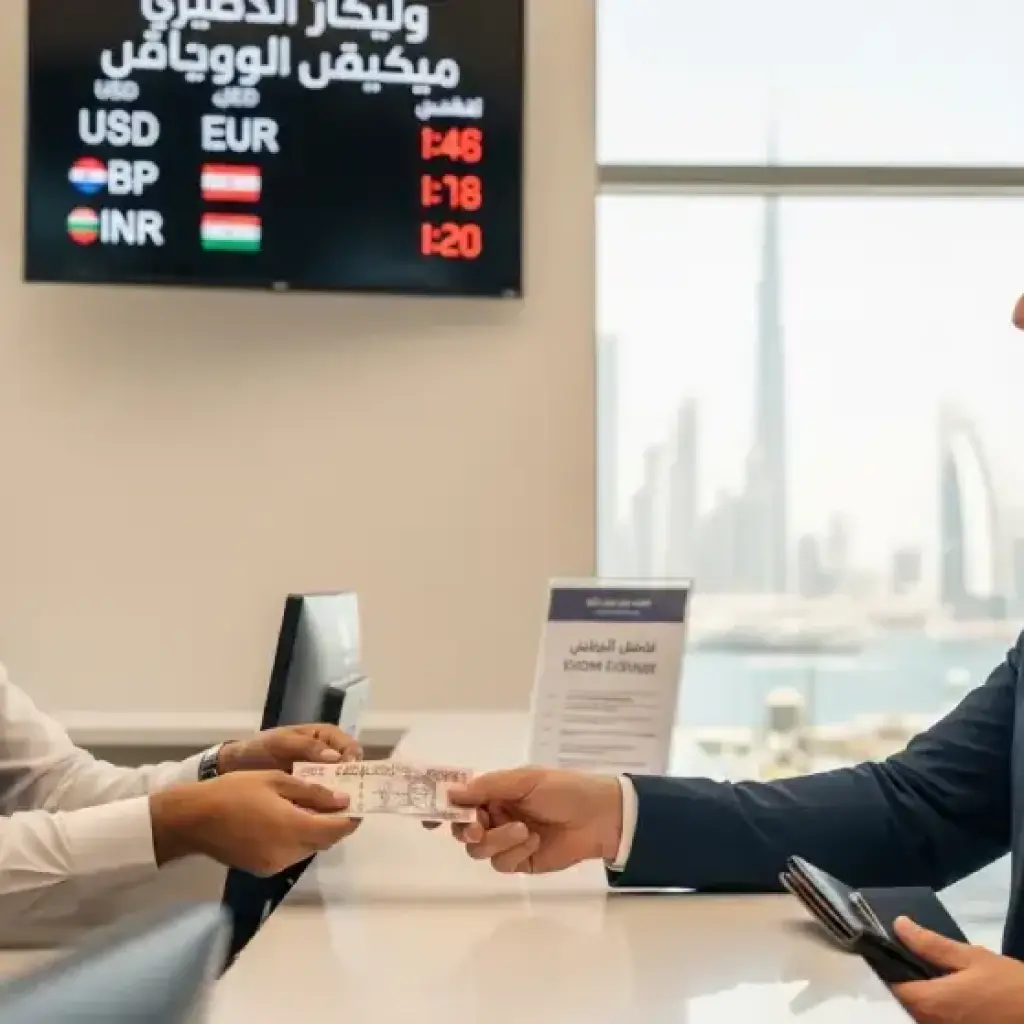
Find the best places to exchange currency in Dubai. Compare top exchange houses, avoid poor rates, and learn smart tips to get more dirhams for your money.
Whether you’re landing in Dubai for a short holiday, a business trip, or a shopping getaway, knowing where to exchange currency can save you more than you think. While it’s easy to find money changers almost everywhere — from the airport to luxury malls — the rates and fees can vary widely.
This detailed guide helps you find the best places to exchange currency in Dubai, understand how to compare rates, avoid hidden fees, and make the most of your travel money.
Before exchanging money, it’s essential to understand how rates work.
The official currency: The UAE Dirham (AED).
Rate basis: AED is pegged to the US Dollar (USD 1 = AED 3.6725). However, other currencies fluctuate daily depending on global markets.
Mid-market rate: The real exchange rate banks use among themselves. This should be your benchmark — it helps you spot if an exchange house is adding a heavy markup.
What Affects the Rate You Get
The location of the exchange (airport vs. city center)
The amount you’re exchanging (bigger amounts may get better rates)
The currency pair (some are more in demand and fetch better deals)
The timing — rates move daily, so comparing on the same day helps
2. Where You Might Lose Money (and How to Avoid It)
Airport Exchange Counters
They’re the most convenient but usually have the worst rates. If you must exchange at the airport, change only a small amount — enough for transport or food — and exchange the rest in the city.
Hotel Exchange Desks
Hotels often offer exchange services at the reception, but they charge a convenience premium. The rates are rarely competitive, and you’ll get more dirhams elsewhere.
Tourist Kiosks
Kiosks in tourist-heavy areas (like Downtown Dubai or Jumeirah Beach) might advertise “no commission,” but they often compensate with higher markups. Always check their rate board carefully before proceeding.
ATMs
Using ATMs can be convenient, but be cautious:
Your home bank may charge withdrawal or foreign transaction fees.
Always choose to be charged in AED, not your home currency, to avoid costly “dynamic currency conversion” fees.
3. The Best Currency Exchange Houses in Dubai
Dubai is home to several licensed and trusted exchange houses regulated by the Central Bank of the UAE. These places generally offer better rates, transparent fees, and fast service.
1. Al Ansari Exchange
One of the largest and most recognized exchange houses in the UAE, with branches in nearly every major mall and commercial area.
Why it’s good:
Consistently competitive rates
Fast service and multilingual staff
Transparent pricing — no hidden fees
Best branches:
Deira City Centre
Mall of the Emirates
Al Ghurair Centre
Tip: Avoid the airport branches for better rates.
2. Al Fardan Exchange
Known for excellent customer service and reliable rates. It’s a good alternative if other exchanges are crowded or out of your way.
Why it’s good:
Strong rates for major currencies
Well-located branches in malls and city centers
Safe and professional service
Best branches:
Bur Dubai
Mall of the Emirates
Dubai Marina
3. Al Rostamani International Exchange
One of the oldest and most trusted names in the UAE exchange market.
Why it’s good:
Long-standing reputation for fair rates
Handles a wide variety of global currencies
Ideal for travelers exchanging larger sums
Best branches:
Al Khaleej Centre (Bur Dubai)
Dubai Mall
Ibn Battuta Mall
4. UAE Exchange
Once a dominant player, UAE Exchange still offers competitive rates at selected branches.
Why it’s good:
Good for quick service and multiple currency availability
Often less crowded than others
Transparent rate boards
Best branches:
Karama
Al Barsha
Dubai Festival City
4. Smart Tips for Getting the Best Rates
Compare Before You Commit
Even a small difference — say AED 3.66 vs AED 3.68 per USD — can mean hundreds of dirhams in savings when exchanging large amounts. Spend five minutes checking rates at two or three exchanges before deciding.
Exchange a Small Amount at the Airport
Change just enough for your first 24 hours in Dubai (transport, snacks, SIM card). Then, head to a city branch the next day to exchange the rest at better rates.
Bring Valid ID
Many exchange houses require your passport or Emirates ID for transactions over AED 3,000. Have your ID ready to avoid delays.
Ask for a Breakdown
If an exchange advertises “No Commission,” confirm that the rate shown is final. Some places offset the lack of commission by offering a weaker rate.
Negotiate for Larger Amounts
If you’re exchanging a substantial amount (like USD 1,000+), politely ask if they can offer a slightly better rate. Many exchanges will accommodate this if you ask.
Use Branches in Malls or Commercial Areas
Exchange counters in malls and business districts (like Deira or Bur Dubai) are more competitive than those in tourist areas or airports.
5. Using ATMs and Cards Wisely
If you have a debit or travel card with low or no foreign transaction fees, withdrawing cash directly in AED can be convenient. However, keep these tips in mind:
Always choose to be charged in AED (never your home currency).
Check if your bank has partner ATMs in Dubai that waive extra fees.
Withdraw in larger amounts rather than multiple small withdrawals to minimize per-transaction charges.
Best ATMs to use: Emirates NBD, Mashreq Bank, ADCB, or HSBC ATMs are reliable and easy to find in malls and metro stations.
6. How Much Cash You Should Carry
Dubai is largely a cashless city, but having some AED on hand is always helpful.
Use Cash For:
Small taxi rides or tips
Traditional markets (souks)
Street food stalls
Parking meters
Use Card For:
Shopping malls
Hotels and restaurants
Ride-hailing apps (Careem, Uber)
Metro ticket machines
Carrying AED 300–500 in cash is often enough for a few days, with the rest handled via card or digital payment apps.
7. Example Strategy: Smart Traveler’s Plan
Here’s how to manage your money efficiently in Dubai:
At the airport: Exchange about USD 50–100 (or equivalent) for immediate expenses.
At your hotel or mall: Compare rates at Al Ansari, Al Fardan, or Al Rostamani.
Exchange the bulk amount (the next morning) at the best rate you find.
Use your card for big purchases and restaurants.
Keep small bills handy for tips, taxis, or souks.
Following this plan ensures you enjoy the convenience of cash and the safety of cards — without overpaying.
8. Common Mistakes to Avoid
Exchanging all your money at the airport: You’ll lose 3–5% instantly to poor rates.
Ignoring the rate board: Always check it and do a quick calculation.
Using unlicensed exchangers: Only use licensed counters inside malls or official branches.
Falling for “no commission” traps: Confirm the final amount you’ll receive.
Keeping leftover currency unexchanged: If you’re not returning soon, reconvert your AED before leaving or spend it.
9. Summary: The Smart Way to Exchange Money in Dubai
Do This
Avoid This
Use Al Ansari, Al Fardan, or Al Rostamani in city malls
Exchanging at the airport or hotels
Compare rates before committing
Assuming all exchanges have the same rate
Bring your passport for large amounts
Forgetting ID (some exchanges won’t proceed)
Ask if rate includes all fees
Falling for “zero commission” gimmicks
Use cards for big purchases
Paying in foreign currency via card
Conclusion: Exchange Smart, Travel Smarter
Dubai makes it easy to exchange currency — but not every counter gives the same value. To get the best rates, avoid airport exchanges, compare offers from reputable exchange houses like Al Ansari, Al Fardan, or Al Rostamani, and keep an eye on fees.
A few minutes of rate-checking can translate into hundreds of extra dirhams in your wallet — perfect for that extra meal, attraction ticket, or souvenir before you fly back home.
Dubai’s education authority has confirmed that schools are not required to reduce tuition fees during distance learning, as online education is considered a valid mode of instruction. Fees remain payable as long as learning services are provided, with refunds only applicable if no education is delivered.
Dubai gold prices saw a slight increase as easing tensions from the US-Iran ceasefire brought stability to global markets. Despite reduced volatility, gold continues to hold firm due to steady safe-haven demand.
Dubai is reimagining Al Jaddaf as a stunning creekside destination with waterfront living, retail, hospitality, and green spaces all in one. If you're watching Dubai's next big property hotspot, this is it.