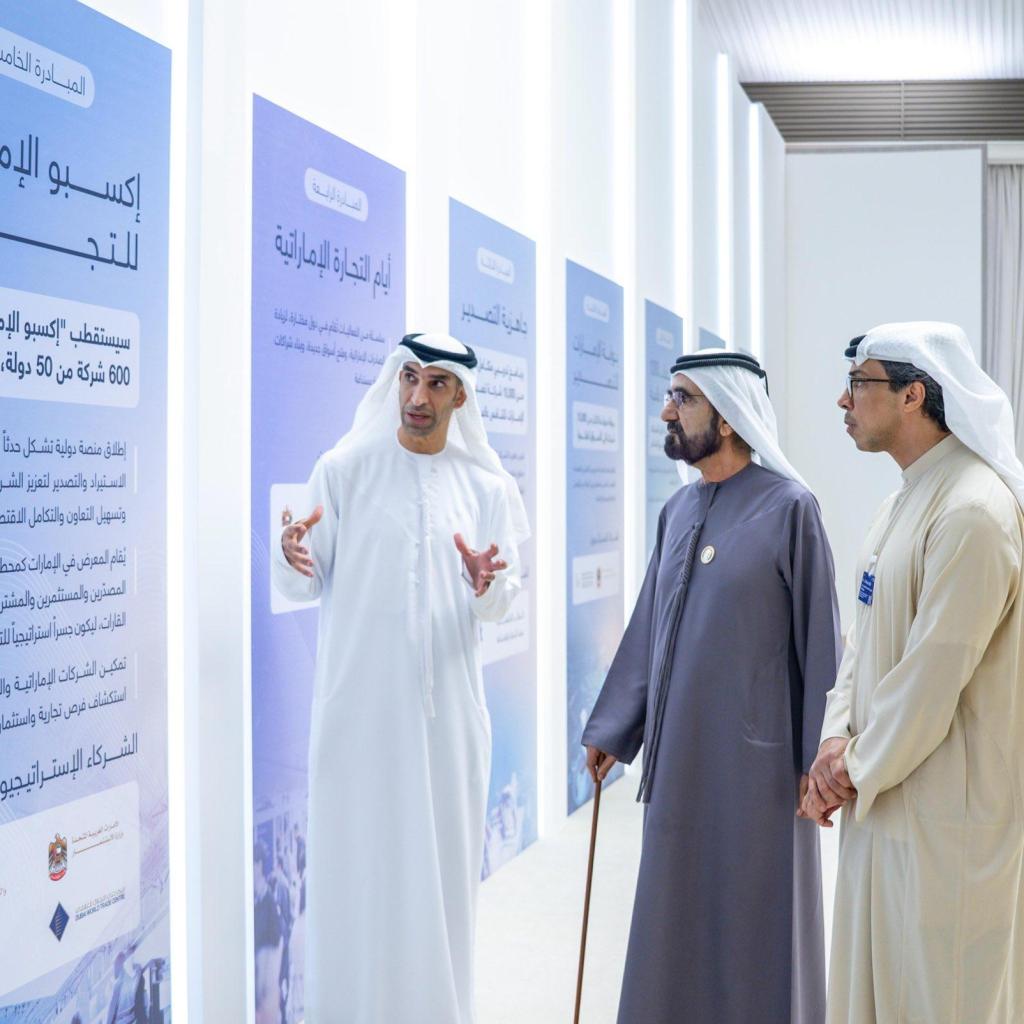
Dubai, UAE: The UAE has launched a bold international economic initiative aimed at drawing the world’s top 1,000 companies specialising in international trade. Announced by His Highness Sheikh Mohammed bin Rashid Al Maktoum, the programme is intended to cement the UAE’s position as a global trade hub and expand export opportunities for Emirati firms.
Central to the initiative is a new digital gateway that will link thousands of UAE-exporting companies to markets abroad. This portal is designed to facilitate smoother access to foreign buyers, reduce barriers to entry, and open up fresh channels for Emirati exports.
Sheikh Mohammed described the programme as a strategic effort to broaden the UAE’s global trade reach. By attracting premier international firms, the UAE aims to deepen cross-border trade partnerships and encourage foreign businesses to use the Emirates as a base for their regional operations.
Economic and Strategic Significance
The drive comes at a moment when the UAE’s non-oil foreign trade is surging, reinforcing its ambition to reduce dependency on hydrocarbons and boost economic diversification. By bolstering trade linkages, the country aims to harness its logistical infrastructure, free zones, and favorable regulations to attract firms that can both import and export at scale.
The digital gateway will provide Emirati exporters with an efficient route to global markets. Through the portal, local companies will gain enhanced visibility and access to international buyers, while foreign firms can more easily find and partner with UAE-based suppliers.
For international companies, the appeal is two-fold: establishing a presence in a stable, business-friendly environment, and leveraging the UAE’s strategic location as a gateway between east and west. The Emirates’ logistics, connectivity, and trade infrastructure make it a compelling option for companies looking to expand.
Implications for Emirati Exporters
For UAE-based exporters, this is a major opportunity. Many smaller or mid-sized companies struggle with access to overseas markets due to limited reach or lack of international contacts. The portal could act as a bridge — expanding their customer base, building ties with global distributors, and fostering long-term export relationships.
Moreover, being part of a platform backed by the government gives confidence to business owners. It signals national-level commitment to facilitating trade, helping reduce administrative friction, and lowering the cost and complexity of entering foreign markets.
By tying the growth of exports to the presence of international trading companies, the UAE is effectively creating a virtuous cycle — the more foreign firms it attracts, the more exposure its exporters get, and the more competitive its trade infrastructure becomes.
Wider Economic Goals
This initiative aligns with the UAE’s broader strategy of positioning itself as a central node in global trade routes. Sheikh Mohammed’s announcement underscores his vision for leveraging the country’s geographical and infrastructural strengths to attract high-calibre companies and transform the economic landscape.
It also dovetails with the country’s push to expand its non-oil GDP through high-value sectors. By facilitating direct trade between export-ready businesses and major global players, the UAE hopes to boost its export volumes and diversify its economy further.
Challenges & Considerations
While the programme is compelling, there are challenges to address:
- Competition for Foreign Firms: As other countries similarly aim to attract global trading companies, the UAE will need to provide strong incentives, reliable infrastructure, and regulatory clarity.
- Adoption of the Gateway: For the portal to be effective, thousands of exporters need to sign up and actively use it. Ensuring good uptake and genuine engagement will be key.
- Trade Risk Management: Increased exposure to international markets means higher risk from global demand fluctuations, logistics bottlenecks, and geopolitical uncertainty.
- Sustaining Value: Beyond attracting companies, the UAE will need to ensure that these firms generate real economic value — via investment, job creation, and meaningful trade — rather than just setting up silos.
Potential Outcomes & Impact
If successful, the programme could significantly reshape trade flows through the UAE. It may lead to increased foreign direct investment, trade volume, and a stronger export base for local companies. The digital gateway could serve as a scalable model for trade facilitation, potentially contributing to the UAE’s standing as a global business hub.
For young and emerging UAE exporters, the initiative might unlock markets that were unreachable earlier, fostering innovation, boosting production, and supporting long-term growth.
On the international side, firms participating in this programme could use the UAE as a regional or global base, helping build integrated supply chains that capitalize on the country’s state-of-the-art logistics and free-zone infrastructure.
Looking Ahead
The launch is just the beginning. Over the coming months, attention will turn to how quickly the digital portal is built and adopted, how many foreign companies commit to the programme, and whether these relationships translate into real trade and investment.
If the first phase goes as planned, the UAE may not just attract 1,000 companies — it could fundamentally redefine its role in global trade, turning itself into both a conduit and destination for international commerce.
Image : X