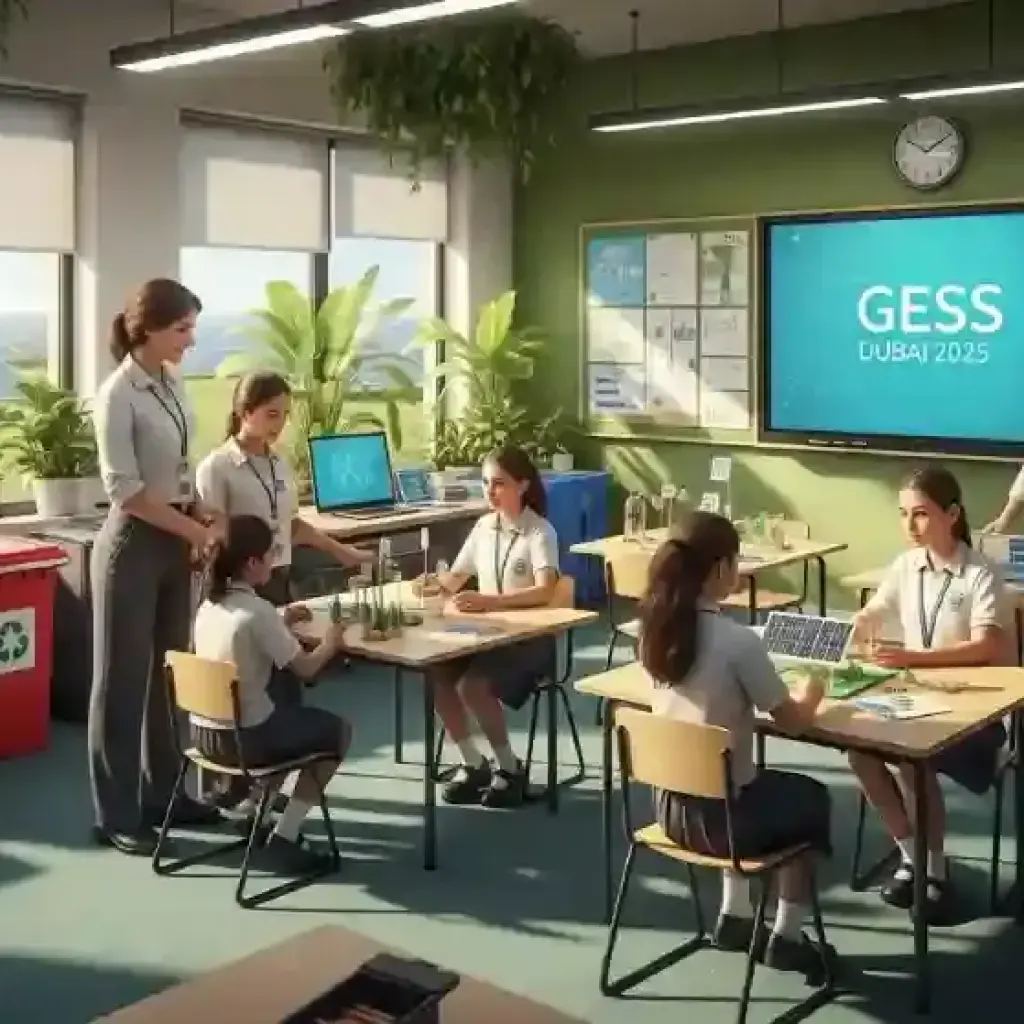
At a time when climate change, resource depletion, and global inequality dominate headlines, the call for sustainability in education has never been stronger. GESS Dubai 2025, the Middle East’s leading education exhibition and conference, places this issue at the forefront—showcasing how schools can inspire the next generation to care for the planet while innovating responsibly.
The event, taking place from 11–13 November 2025 at Dubai World Trade Centre, unites educators, policymakers, and EdTech leaders from around the world to explore how sustainable practices, environmental education, and technology can together drive long-term global change.
1. Why Sustainability Matters in Education
Sustainability in education is about more than recycling bins and solar panels—it’s about shaping values, choices, and mindsets that sustain the planet. GESS Dubai 2025 recognizes that education systems play a critical role in building environmental awareness and responsibility from early learning through higher education.
By integrating sustainability into the curriculum and school culture, educators can help students become environmentally conscious citizens who think globally and act locally. The event highlights the idea that schools must lead by example—teaching sustainability while practicing it.
2. The GESS “Sustainability and Well-being Space”
A major feature of GESS Dubai 2025 is its Sustainability and Well-being Space—a dynamic zone where experts showcase eco-friendly school designs, renewable technologies, and educational programs centered on environmental literacy.
This space features workshops, live demonstrations, and discussions around:
- Reducing carbon footprints in schools.
- Green school architecture and energy-efficient design.
- Waste reduction and recycling systems.
- Curriculum integration of climate education.
- The intersection of sustainability and student well-being.
Educators attending these sessions leave with actionable strategies to make sustainability part of daily school life, from procurement to pedagogy.
3. Sustainable School Design: The Future of Learning Spaces
Modern schools are being reimagined as living laboratories of sustainability. At GESS Dubai 2025, architects and environmental experts present case studies of schools that integrate renewable energy, natural ventilation, and green spaces into their infrastructure.
These designs not only minimize environmental impact but also improve student performance and mental health. Research shows that access to daylight, greenery, and natural materials enhances focus and reduces stress—creating a stronger link between environmental design and emotional well-being.
Innovations on display include:
- Solar-powered learning centers.
- Smart energy monitoring systems.
- Water-saving technologies.
- Classrooms built from recycled or sustainable materials.
Such ideas align with the UAE’s Net Zero by 2050 Strategy, positioning education as a central driver of environmental transformation.
4. Embedding Environmental Education in Curriculum
True sustainability starts in the classroom. GESS Dubai 2025 explores how schools can embed environmental topics into every subject, not just science.
For example, mathematics lessons can use real-world data about energy consumption, while language classes can explore sustainability stories from different cultures. Arts and design courses can focus on upcycling projects or awareness campaigns.
Several keynote sessions focus on Project-Based Learning (PBL) for sustainability, where students collaborate on projects addressing real environmental challenges—such as reducing school waste, creating gardens, or conducting local clean-up drives.
These hands-on experiences foster critical thinking, teamwork, and problem-solving—skills essential for future sustainability leaders.
5. Technology and Innovation for a Sustainable Future
Technology is both a challenge and a solution for sustainability. GESS Dubai 2025 balances this conversation by highlighting innovations that reduce environmental impact while enhancing learning outcomes.
Exhibitors present AI-driven energy management systems, digital classrooms that minimize paper use, and cloud-based tools that allow schools to track and optimize resource consumption.
There’s also emphasis on digital responsibility—teaching students that sustainability includes mindful tech use, e-waste management, and energy efficiency in digital learning environments.
The event’s forward-thinking approach shows how EdTech and sustainability can work together to create smart, green, and connected schools.
6. Empowering Teachers as Sustainability Leaders
Educators are the driving force behind cultural change in schools. GESS Dubai 2025 provides dedicated sessions on teacher empowerment, helping them become ambassadors of sustainability in their communities.
Workshops train teachers to:
- Integrate sustainability topics creatively into lessons.
- Lead eco-clubs and green projects.
- Engage parents and local communities in sustainability goals.
- Measure and report environmental progress in schools.
By empowering teachers, the event ensures sustainability becomes part of the educational DNA, not just an extracurricular topic.
7. Student-Led Sustainability Initiatives
One of the most inspiring trends at GESS Dubai is the rise of student-driven environmental action.
The event features showcases where students present their projects—from solar energy prototypes to urban gardening and recycling programs. These initiatives highlight the creativity and leadership potential of youth when given the tools and encouragement to act.
This aligns with global movements like the UNESCO Education for Sustainable Development (ESD) goals, which emphasize youth participation in addressing climate challenges. GESS Dubai provides a platform for these young voices to be heard, celebrating innovation and activism among students.
8. Global Collaboration and Policy Support
Sustainability in education requires cross-border collaboration. GESS Dubai 2025 gathers experts from ministries, NGOs, and international education bodies to share best practices and align strategies.
Sessions explore how policy frameworks and funding can accelerate the transition toward greener education systems. The UAE, in particular, continues to lead by example through initiatives like Green Education Partnership Roadmap, which integrates climate literacy and environmental action into national education goals.
This collaborative spirit ensures that sustainability in education is not just an event theme—it’s a long-term movement shaping the global learning agenda.
9. Measuring Impact: From Awareness to Action
One challenge in sustainability education is ensuring that awareness translates into measurable impact. GESS Dubai 2025 addresses this by promoting data-driven evaluation methods.
Schools are encouraged to set clear sustainability metrics—from energy savings to reduced waste—and to involve students in tracking progress.
The message is that sustainability must be lived and measured, not just discussed. By making results visible, schools can inspire pride and accountability among students, parents, and staff.
10. Conclusion: Educating for a Greener Tomorrow
GESS Dubai 2025 reinforces a powerful idea: education is the foundation of sustainable change.
By teaching students to care for the planet, empowering teachers to lead by example, and transforming schools into eco-conscious communities, the event illustrates how learning can become a force for environmental resilience.
Sustainability is not a trend—it is a necessity. The lessons shared at GESS Dubai 2025 remind the global education community that the path to a greener future begins in the classroom.
Through innovation, collaboration, and compassion, schools can nurture a generation ready to protect our world for decades to come.