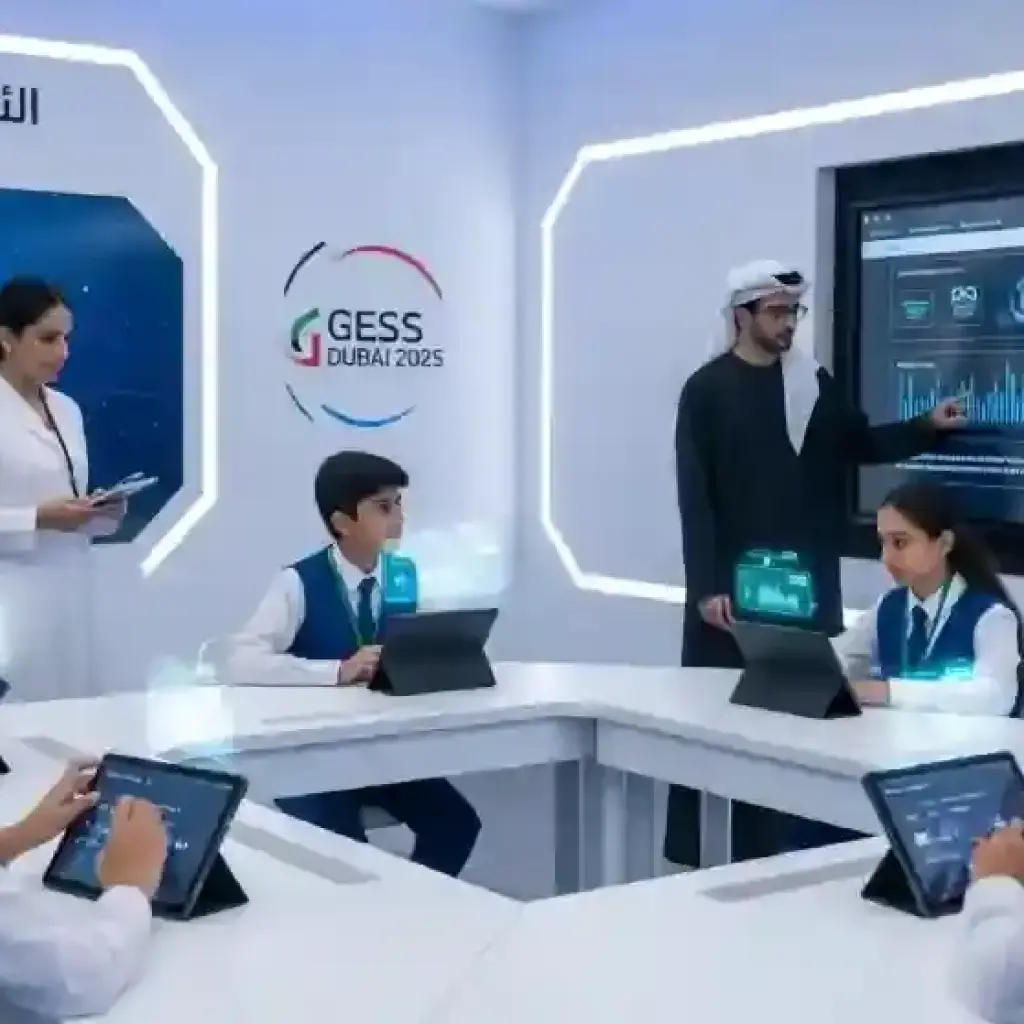
The 18th edition of GESS Dubai—taking place from 11 to 13 November 2025 at the Dubai World Trade Centre, Sheikh Saeed Halls 1–3—has declared artificial intelligence (AI) a central theme. The 2025 event focuses on how transformative technologies such as AI, immersive tech, and virtual reality are reshaping the future of education.
This article explores how AI is being embedded into K-12 and higher education, what the event highlights about this shift, and what educators and decision-makers should consider when adopting AI in classrooms.
1. The Context: Why AI Now in Education?
Across the Gulf region, schools are rapidly moving from AI experimentation to full-scale adoption. The GCC international schools market already includes more than 1.8 million students and nearly 140,000 staff across almost 1,800 schools.
AI’s growing prominence in education is driven by the need for personalisation, data-based insights, administrative efficiency, and enhanced student engagement. After the digital acceleration prompted by the pandemic, institutions worldwide are seeking smarter ways to teach and manage learning.
However, integrating AI also raises questions: How do schools protect data privacy? Are teachers prepared? Will automation widen the gap between well-resourced and under-resourced schools? These issues shape the agenda at GESS Dubai 2025.
2. GESS Dubai 2025 Highlights: Key Sessions and Focus Areas
This year’s “EdTech in Action” stream explores AI from multiple angles—pedagogical, operational, and ethical. Among the sessions are:
- AI in Primary Schools: Unlocking the Future of Learning – exploring how adaptive AI platforms can personalise lessons in early education.
- AI and Automation: Reducing Administrative Work in Schools – focusing on how automation streamlines scheduling, reporting, and routine paperwork.
- Do Androids Dream of Dyslexic Sheep? Ethics and Neuronormative Injustice in AI – tackling issues of bias and accessibility for students with diverse learning needs.
- Beyond the Hype: Rethinking AI, Screen Time and the Future of Learning – analysing the balance between digital innovation and student wellbeing.
These sessions demonstrate how GESS Dubai 2025 bridges practical application and ethical debate—presenting AI as a powerful but complex tool for transformation.
3. The Benefits of AI in Classrooms
When thoughtfully applied, AI delivers multiple benefits across all levels of education:
- Personalised learning: AI systems analyse performance data to adapt lessons to each student’s pace, providing targeted support where needed.
- Teacher efficiency: Automation handles repetitive tasks such as grading, attendance, and report generation, freeing teachers to focus on mentoring and creativity.
- Data-driven insights: Real-time analytics help educators identify learning gaps early and design timely interventions.
- Enhanced engagement: AI combined with immersive tools like AR/VR fosters interactive learning and stimulates curiosity.
- Support for inclusion: AI technologies can create accessible materials, translate content instantly, and adapt to the needs of learners with disabilities.
These innovations are particularly valuable in rapidly expanding education systems such as those in the GCC, where efficiency and scalability are essential.
4. The Challenges of Implementation
Despite the promise, AI integration brings challenges that schools must address thoughtfully:
- Infrastructure readiness: Successful adoption requires reliable connectivity, devices, and platforms—an uneven reality across many regions.
- Teacher training: Professional development is vital. Educators must understand how AI works, what data it uses, and how to integrate it pedagogically.
- Ethics and privacy: Schools must protect sensitive student information, ensure transparency, and avoid algorithmic bias that could disadvantage certain learners.
- Equity of access: Without careful planning, AI could widen the gap between institutions with strong digital infrastructure and those without.
- Balancing wellbeing: Overreliance on screens or data analytics can reduce social interaction and creativity. Maintaining a human-centred approach is essential.
- Sustainability: Small pilot projects often succeed, but scaling them requires strategy, funding, and leadership commitment.
AI should never be introduced as a quick fix; it demands a clear vision aligned with teaching goals.
5. Practical Steps for Schools
Schools attending GESS Dubai 2025 can use the following roadmap for effective AI integration:
- Audit the current state: Review digital infrastructure, teacher readiness, and available tools.
- Set clear objectives: Define what AI should achieve—personalisation, efficiency, or data visibility.
- Start small: Pilot AI tools in one department or grade, evaluate results, then expand strategically.
- Invest in people: Provide training that covers both technical skills and the ethics of AI use.
- Protect data: Establish robust policies on data collection, storage, and sharing.
- Measure impact: Track progress with specific indicators such as learning outcomes or time saved.
- Keep pedagogy central: Technology should enhance—not replace—teaching. Human creativity and empathy remain irreplaceable.
- Engage stakeholders: Communicate openly with students, parents, and staff to build trust and understanding.
- Stay updated: Use events like GESS Dubai 2025 to learn about emerging innovations, global trends, and real-world case studies.
6. The Future of AI in Education
The conversations at GESS Dubai 2025 indicate where the field is heading over the next few years:
- Mainstream adoption: AI will become a standard component of curriculum planning, assessment, and administration.
- AI literacy for all: Understanding AI concepts and ethics will become essential for both students and educators.
- Blended learning ecosystems: Classrooms will combine human teachers, digital tools, and intelligent systems to deliver flexible learning experiences.
- Ethical frameworks: Transparency, fairness, and data protection will be built into every AI initiative.
- Operational transformation: Administrative automation will continue to expand, creating efficiency across entire school networks.
- Global collaboration: As GESS Dubai 2025 connects educators, EdTech providers, and investors, partnerships will accelerate innovation across borders.
These trends highlight that AI’s future in education is not just about technology—it’s about leadership, inclusion, and responsible implementation.
7. Conclusion
Artificial intelligence is no longer a distant concept in education; it is an active force shaping classrooms worldwide. GESS Dubai 2025 brings this transformation into sharp focus, offering educators a unique opportunity to explore AI’s real-world applications and ethical dimensions.
By embracing AI strategically—auditing readiness, setting clear goals, prioritising teacher development, and keeping learners at the centre—schools can transform both teaching and learning outcomes.
The message from GESS Dubai 2025 is clear: AI is here to stay, but its success depends on how responsibly it is adopted. The most advanced classrooms of the future will not be defined by algorithms or devices but by educators who know how to harness AI to nurture human potential.