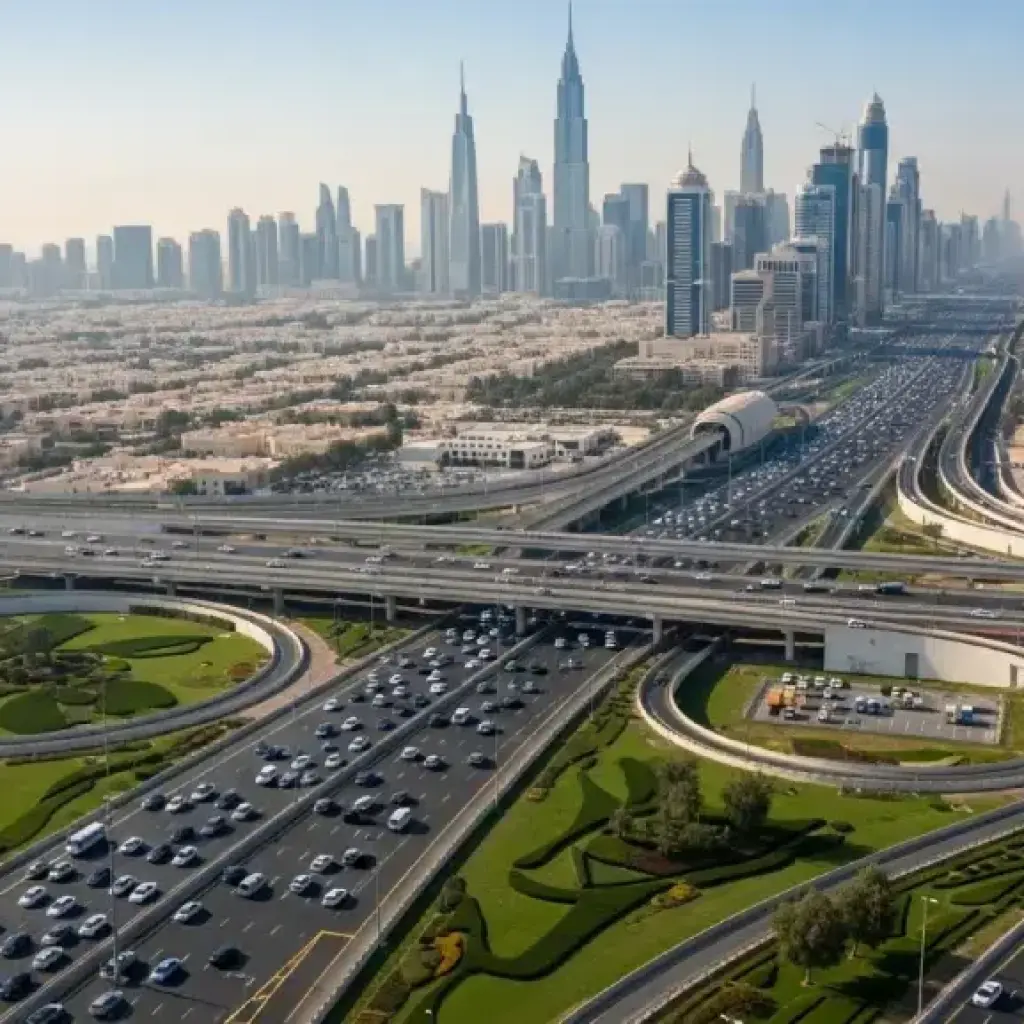
The Dubai–Sharjah route is one of the busiest daily corridors in the UAE, used by hundreds of thousands of commuters every morning and evening. Whether you’re traveling for work, school, or essential tasks, understanding exact traffic patterns, best timings, and the most reliable route strategies can save hours every week. This guide offers a clear explanation of how traffic forms, when congestion peaks, which roads suffer the most delays, and what shortcuts genuinely work in 2025—not outdated advice or generic suggestions.
Why Dubai–Sharjah Traffic Is Uniquely Challenging
Dubai and Sharjah are deeply connected with a shared workforce. Around 35–40% of Sharjah residents commute to Dubai daily. This constant movement creates repetitive peaks during morning and evening hours.
Here are the core reasons congestion remains heavy:
- Limited number of main connecting roads
E11 (Sheikh Zayed Road), E311 (Sheikh Mohammed Bin Zayed Road), and Al Ittihad Road handle most of the daily load. - Population growth vs. road expansion
New communities grow faster than road infrastructure can expand. - Major business hubs in Dubai
Dense job concentration near Business Bay, DIFC, Deira, and Al Barsha pulls heavy commuter traffic. - School-hours overlap
School timings in Sharjah greatly affect the morning slowdown.
Understanding these factors helps map the exact traffic rhythm.
Morning Traffic Patterns: When and Where Traffic Builds Up
Morning traffic follows a predictable wave, starting from Sharjah and moving into Dubai. Here’s a breakdown of what happens between 5:30 AM and 10:00 AM.
5:30 AM – 6:15 AM: Free Flow or Slight Slowdown
If you leave during this window:
- Al Ittihad Road: Mostly smooth
- E311: Very manageable
- E611: Calmest
- Sheikh Zayed Road (after entering Dubai): Free flowing
- School zones: Quiet
Best Time to Travel:
This is the most reliable time frame for a fast trip. Reaching Dubai typically takes 25–40 minutes, depending on your destination.
6:15 AM – 7:30 AM: Early Build-Up Begins
This is when the first congestion pockets appear:
- Sharjah to Al Nahda becomes slow
- Al Ittihad Road towards Deira shows first red patches
- E311 near Muwaileh and Industrial Areas begins to tighten
- Dubai-bound intersections like Al Garhoud Bridge see early pressure
Reasons:
- School buses start operating
- Corporate staff preparing for 8 AM shifts begin their commute
- Logistics vehicles enter highways
If you leave during this time, expect delays of 15–25 minutes.
7:30 AM – 9:15 AM: The Peak Morning Traffic Wave
This is the most congested period, when delays can reach 45–90+ minutes.
The worst hotspots are:
- Al Ittihad Road between Al Nahda & Deira
- Sharjah Industrial Area 8 to 12 exit ramps
- E311 near Mirdif, Muhaisnah & Al Qusais
- Sheikh Zayed Road near World Trade Centre & Business Bay
Additional friction:
- School drop-off time (7:00 AM – 8:00 AM)
- Office arrival windows (8–9 AM)
- Slow traffic merging into Dubai’s central zones
If you leave Sharjah after 7:30 AM, you will likely encounter long queues at:
- Al Taawun Bridge
- Al Khan
- Al Mamzar Underpass
- Al Qusais–Dubai Airport tunnel areas
Best Avoidance Strategy:
This is the one window where leaving earlier is significantly smarter than finding alternate routes.
9:15 AM – 10:00 AM: Gradual Decline in Traffic
Traffic begins to clear as:
- Schools complete their first sessions
- Offices finalize check-ins
- Delivery and logistics vehicles distribute across routes
By 9:45–10:00 AM, roads return to near-free-flow conditions.
Evening Traffic Patterns: The Reverse Wave From Dubai to Sharjah
The evening wave behaves differently than the morning direction. It is more spread out, and congestion is heavily affected by:
- Early office exits
- School pickup timings
- Evening shopping traffic
- Weekend plans
- Events in Deira, Bur Dubai, and Stadium areas
Let’s break this down.
3:30 PM – 4:30 PM: School-Peak Pressure
Traffic first forms near:
- Al Qusais
- Bur Dubai → Al Nahda exits
- Business Bay → Sheikh Zayed Road ramp
- Al Garhoud & Festival City
This causes mild to moderate congestion toward Sharjah.
Travel time rises from 25 minutes to 40–55 minutes.
4:30 PM – 6:00 PM: Evening Peak Begins
This window marks the start of office exits and early-shift employees heading home.
Most congested points:
- Sheikh Zayed Road (WTC → Deira)
- Business Bay → Oud Metha exit
- Al Ittihad Road → Sharjah border
- E311 Muhaisnah → Sharjah
Restaurants, cafeterias, and shopping centers also activate the traffic flow around Stadium, Al Rigga, and Al Nahda Mall.
Expect travel times of 55–90 minutes.
6:00 PM – 8:00 PM: The Most Congested Evening Phase
This is the absolute peak, worse on Thursdays, and extra heavy during public events.
Major choke points:
- Al Ittihad Road entering Sharjah
- Al Taawun Road
- Al Khan Corniche
- E311 Sharjah industrial exits
- Al Nahda Dubai → Al Nahda Sharjah border
Reasons:
- Almost all offices release employees between 5–7 PM
- Families go out for dinner
- Shopping malls activate
- Weekend/Thursday crowds begin to travel
Travel time often exceeds 1 hour 20 minutes.
8:00 PM – 9:30 PM: Slow But Gradually Improving
Dubai-bound roads open up first, while Sharjah-bound traffic stays heavy until around 9 PM.
- Expect 35–50 minutes of travel.
- Fastest lanes flow better than internal Sharjah roads.
- Industrial areas remain crowded until 9:30 PM.
After 9:30 PM: Clear Roads
Traffic almost disappears by:
- 10:00 PM on weekdays
- 11:00 PM on weekends (due to late-night activities)
Travel time: 20–30 minutes.
Best & Worst Times to Travel Between Dubai and Sharjah
Best Times (Fastest Travel)
- Morning: Before 6:15 AM
- Late Morning: 9:30 AM – 12 PM
- Afternoon: 2 PM – 3:30 PM
- Night: After 9:30 PM
Worst Times (Most Delays)
- Morning Peak: 7:30 AM – 9:15 AM
- Evening Peak: 6 PM – 8 PM
- Thursday Rush: 4 PM – 10 PM
Most Reliable Routes & When to Use Them
1. Al Ittihad Road (E11)
- Best for early morning travel
- Avoid during 8 AM and 6–8 PM
2. E311 (Sheikh Mohammed Bin Zayed Road)
- Best for those traveling to Al Barsha, JVC, Academic City
- Avoid between 6:30–8:30 AM and 5–7 PM
3. E611 (Emirates Road)
- Best long-route alternative
- Smoothest road but adds distance
- Great for avoiding Sharjah internal traffic
4. Sharjah Bypass → Mirdif → Dubai
- Useful when Al Nahda borders are locked
- Works best during school hours and evening peak
Tips to Reduce Daily Travel Stress
1. Adjust Work Hours If Possible
Starting at 7 AM or 10 AM avoids the worst.
2. Use Real-Time Apps
- RTA app
- Google Maps
- Dubai Police
- S’hail
3. Park & Metro Strategy
Many commuters now:
- Drive to Deira / Stadium / Etisalat Metro
- Park
- Take the Metro to Business Bay, Bur Dubai, or Sheikh Zayed Road
This saves time on heavy days.
4. Weekend Planning
Leave early if traveling on Thursdays—usually before 4 PM.
Conclusion
Dubai–Sharjah traffic is intense but predictable. By understanding how the morning and evening waves move, commuters can plan smarter and avoid the worst bottlenecks. Whether you choose early departures, alternate routes, or adjusted timings, a strategic approach can save 5–10 hours every week—the difference between a stressful commute and a manageable routine.