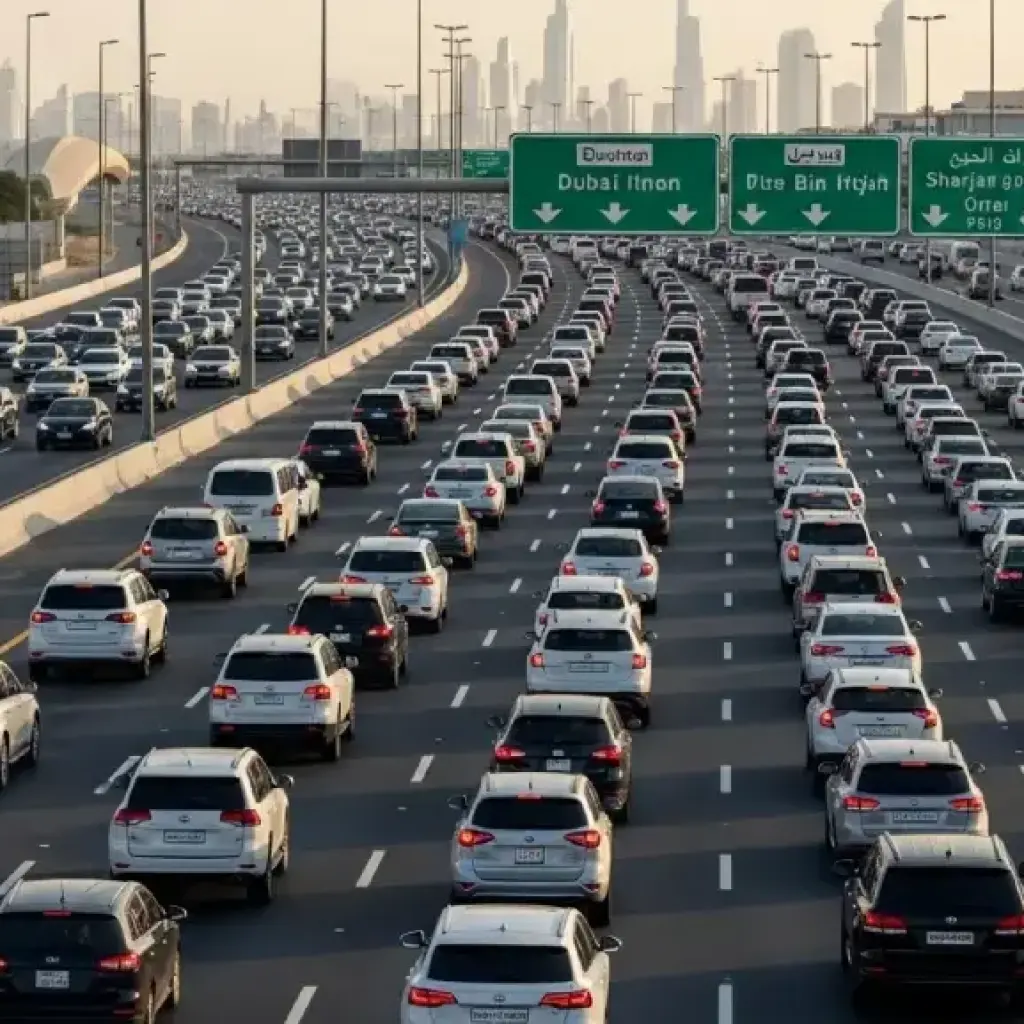
Dubai–Sharjah traffic is not just a transportation issue—it's a daily challenge that shapes routines, work schedules, school timings, and even how families plan their weekends. With thousands of commuters moving between the two emirates every morning and evening, understanding the traffic pattern can save hours every week. This guide breaks down the best times to travel, worst hours to avoid, routes that stay clogged, and smart strategies every UAE resident should know.
Why Dubai–Sharjah Traffic Is Always Heavy
The Dubai–Sharjah corridor is one of the busiest in the UAE. Several reasons make it a highly congested stretch:
- A massive number of residents live in Sharjah but work in Dubai due to lower rents
- Limited connecting roads between the two emirates
- Narrow exits and merging points create bottlenecks
- Peak travel for offices, schools, and cargo vehicles overlaps
- A rapidly growing population puts constant pressure on major routes
Understanding these patterns allows you to plan your commute strategically rather than getting stuck in hours of slow movement.
BEST TIME TO TRAVEL FROM SHARJAH TO DUBAI
1. Ideal Window: 5:30 AM – 6:30 AM
If you need to reach Dubai early, this is the smoothest period. Traffic flows with minimal disruption across:
- Sheikh Mohammed Bin Zayed Road
- Al Ittihad Road
- Al Nahda corridor
After 6:30 AM, the road starts to tighten quickly.
2. Moderately Busy but Manageable: 6:30 AM – 7:30 AM
This hour sees increasing traffic but remains faster than the peak rush. You can still expect movement—though slower—near:
- Al Nahda signal
- Sharjah Industrial entrances
- Al Khan exit
3. Avoid Rush Hours: 7:30 AM – 9:00 AM
This is the worst possible time to travel. All main roads become gridlocked because:
- Schools open around 7:15–7:45 AM
- Offices open between 8:00 AM–9:00 AM
- Buses and vans also hit the road
The stretch from Al Taawun Mall to Al Mulla Plaza becomes heavily clogged. A 20-minute route can turn into a 90-minute journey.
4. After 9:00 AM – Free Flow
Once the morning rush ends, most roads clear up.
Between 9:00 AM – 1:00 PM, the drive is smooth:
- Ideal for deliveries
- Good for personal errands
- Best for long-distance travel into central Dubai
BEST TIME TO TRAVEL FROM DUBAI TO SHARJAH
1. Early Afternoon Smooth Period: 1:00 PM – 4:00 PM
If you're heading back from work early or doing school pickups, this is the best window.
2. Worst Evening Rush Hour: 5:00 PM – 8:30 PM
This is when the Dubai–Sharjah traffic is at its breaking point:
- People leaving offices
- Residents heading home
- Families going to malls and supermarkets
- Weekend crowds (Thu–Sat) amplify delays
The worst bottlenecks occur at:
- Al Nahda interchange
- Al Qusais Industrial 1 and 2
- Near Safeer Mall/Ansar Mall corridor
- Rolla and Al Taawun area feeds
A normal 20-km drive can stretch past 2 hours during this period.
3. Best Late Evening Slot: After 9:00 PM
After 9 PM, traffic gradually clears and stays smooth until midnight.
WORST ROUTES TO AVOID DURING PEAK HOURS
Some roads become unavoidable chokepoints no matter the day. These are the stretches you should avoid whenever possible.
1. Al Ittihad Road (E11) – Most Congested in UAE
This road handles the highest volume of traffic because it is the most direct Sharjah–Dubai link. Expect slow movement at:
- Al Khan Exit
- Al Nahda Bridge
- Al Mulla Plaza underpass
- DNATA signal
2. Sheikh Mohammed Bin Zayed Road (SMBZ / E311)
While wider, this road still jams during peak hours. The worst sections include:
- Industrial Area 3 and 4 exits
- Al Qusais access points
- Muhaisnah 3–4 merging lanes
3. Al Nahda Street & Corniche Road (Internal Sharjah)
Before even reaching Dubai, these internal Sharjah roads become heavily congested:
- Al Taawun area
- Al Khan roundabout
- Al Majaz streets
4. Sharjah Industrial Area (Industrial 1–10)
A hotspot for trucks, buses, and commercial vehicles, especially between:
- 6:45 AM – 9:00 AM
- 5:30 PM – 7:30 PM
5. Al Qusais & Al Mamzar Interchanges
These have several merging points and heavy school traffic.
BEST ALTERNATIVE ROUTES TO SAVE TIME
Even during rush hours, a few strategic decisions can reduce congestion time drastically.
1. Emirates Road (E611) – Best for Long-Distance Commute
If you're traveling to:
- Jebel Ali
- DIP
- Dubai South
- Al Barsha
E611 is often faster and more stable than SMBZ or E11.
2. Airport Tunnel Route
From Deira to Sharjah, some drivers reduce time by using:
- Al Maktoum Road
- Airport Tunnel
- Al Nahda exit
This avoids part of the E11 bottleneck.
3. Al Mamzar Beach Road (Scenic Route)
Not the shortest, but useful during extreme congestion.
4. Use University City Road from Sharjah
Leads to:
- Al Warqa
- Mirdif
- Dubai Silicon Oasis
Keeps you away from the coastal pressure points.
DAY-BY-DAY TRAFFIC VARIATIONS
Sunday–Wednesday
Consistently heavy during peak hours.
Thursday
Worst evening traffic of the week due to:
- Weekend travel
- Family outings
- Late-night shopping plans
Friday
Morning is free-flowing; afternoon picks up slightly.
Saturday
Mixed: mornings smooth, evenings busy due to Sharjah crowds returning from Dubai.
BEST TIMES FOR UAE TOURISTS TO TRAVEL
Tourists often travel between Dubai and Sharjah for:
- Hotels
- Beaches
- Heritage sites
- Shopping malls
Ideal travel windows for tourists:
- 10 AM – 3 PM (smoothest)
- After 9 PM (confidence of free traffic)
Worst hours for tourists:
- 7:30 AM – 9:00 AM
- 5:00 PM – 8:00 PM
Avoid planning airport trips during these times unless necessary.
SMART STRATEGIES TO AVOID DUBAI–SHARJAH TRAFFIC
1. Start 20–25 Minutes Earlier
A small shift in departure time can cut your commute drastically.
2. Use Google Maps or Waze Live Updates
They show real-time congestion zones and reroute intelligently.
3. Avoid Exits Near Schools
Especially in:
- Al Nahda
- Al Qusais
- Industrial Areas
4. Park-and-Ride Strategy (For Dubai Metro Users)
If possible, park at these stations:
- Stadium
- Abu Hail
- Etisalat
- Centrepoint
Then take the Metro to avoid peak congestion.
5. Use Sharjah–Dubai Water Taxi (Under RTA)
Especially from Al Ghubaiba to Sharjah Aquarium.
6. Consider Flexible Work Timings
If your employer allows early start or late start, it can save hours weekly.
FINAL TAKEAWAY
Dubai–Sharjah traffic isn't going away anytime soon, but with smart planning, you can dramatically reduce the daily stress. Understanding the worst roads, best travel times, and smart alternative routes helps you save time, fuel, and energy. Whether you're a daily commuter or a tourist, using this guide ensures you avoid the worst chokepoints and enjoy smoother, faster travel between the two busiest emirates in the UAE.