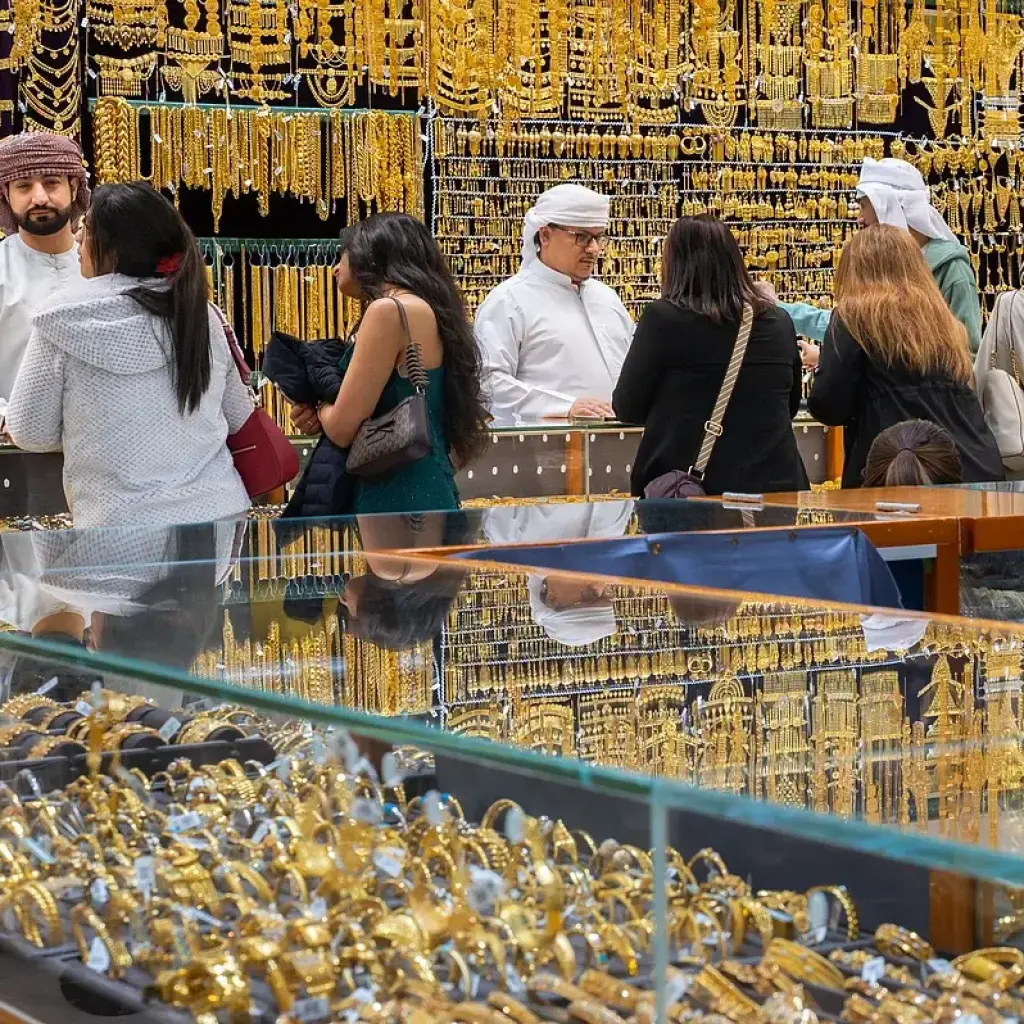
Gold prices in Dubai recorded a sharp rise on March 11, increasing by more than Dh14 per gram within just 24 hours. The sudden surge reflects strong global demand for the precious metal, as investors increasingly turn to gold as a safe-haven asset amid ongoing geopolitical tensions and uncertainty in global markets.
According to the latest data released by the Dubai Jewellery Group, the price of 24-carat gold was trading at around Dh627.25 per gram on Wednesday morning. Although the price showed a slight dip from the previous night’s close of Dh628, it still represented a significant increase compared with Tuesday morning’s levels. Overall, the metal gained about Dh14.25 per gram within a single day, marking one of the most notable short-term jumps in recent weeks.
Other gold variants in Dubai also recorded higher prices. The rate for 22-carat gold was around Dh580.75 per gram, while 21-carat gold traded at Dh557 per gram. Meanwhile, 18-carat gold stood at Dh477.25 per gram and 14-carat gold was priced at approximately Dh372.25 per gram. These increases reflect the broader upward movement in the bullion market.
Market analysts attribute the rise in gold prices to a combination of global political tensions and shifting expectations about economic policies. Continued geopolitical uncertainty — particularly conflicts and delayed peace negotiations in different regions — has strengthened demand for gold, which investors often view as a safe store of value during unstable periods.
Experts note that geopolitical developments tend to influence commodity markets quickly. When political tensions increase or global economic risks appear uncertain, investors often shift their money toward assets considered more stable. Gold historically performs well during such periods because it is perceived as a hedge against inflation, currency fluctuations, and financial instability.
Another factor supporting the price of gold is the growing demand from central banks around the world. Many central banks have been increasing their gold reserves as part of efforts to diversify their financial assets and reduce reliance on major currencies. This steady institutional demand can provide strong long-term support for bullion prices even when short-term fluctuations occur.
Financial market analysts also point out that upcoming economic data from the United States could influence gold prices in the coming days. Investors are closely watching inflation figures and Personal Consumption Expenditures (PCE) data, both of which are key indicators for monetary policy decisions. If inflation remains high or economic uncertainty continues, demand for gold could remain strong.
In addition, expectations surrounding interest rate decisions from major central banks are another major factor affecting the gold market. Lower interest rates tend to support higher gold prices because they reduce the opportunity cost of holding non-yielding assets such as gold. Conversely, higher rates can sometimes limit gains in bullion prices.
Dubai is considered one of the world’s leading gold trading hubs, attracting both investors and jewellery buyers. The city’s competitive pricing, relatively low taxes, and strong retail market make it a popular destination for purchasing gold jewellery and bullion. As a result, even small changes in global gold prices are closely tracked by residents, traders, and tourists alike.
For shoppers and investors in the UAE, the recent price jump may influence purchasing decisions. Some buyers may delay purchases in anticipation of potential price corrections, while others could see the rise as confirmation of gold’s strength as a long-term investment.
While short-term fluctuations are common in the gold market, analysts suggest that broader geopolitical developments and economic indicators will continue to determine the metal’s direction in the coming weeks. If global uncertainty persists, gold prices could remain elevated or even move higher.
source : khaleejtimes
image source:menafn