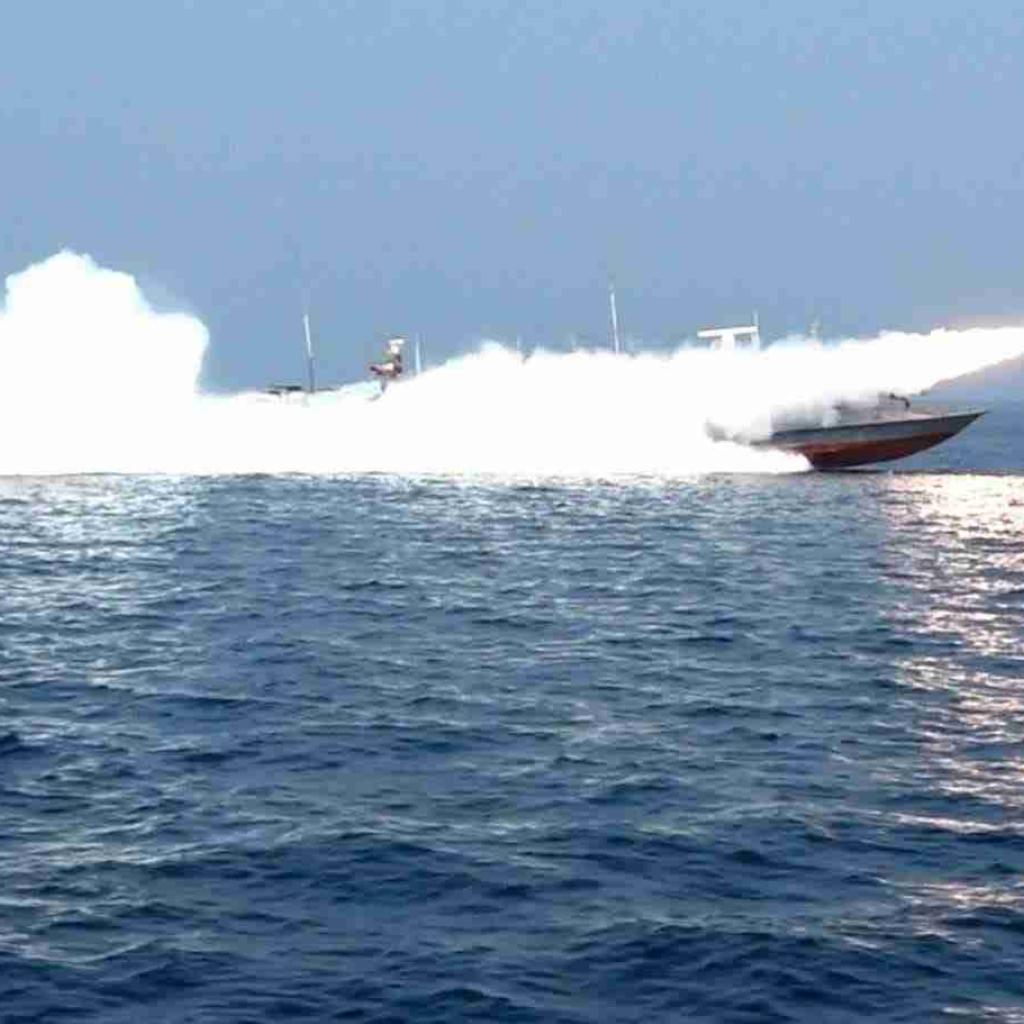
Donald Trump has issued a stark warning to Iran, declaring that any Iranian naval vessels attempting to challenge the United States’ blockade around Iranian ports will be “immediately ELIMINATED.” The statement marks a significant escalation in tensions, even as global leaders continue urging restraint and renewed diplomatic negotiations.
The warning came as the US military officially enforced a sweeping naval blockade targeting Iranian ports. The measure, which took effect at 1400 GMT, applies to all ships attempting to dock at or depart from Iranian harbors, signaling a major shift in Washington’s strategy to pressure Tehran.
Trump’s Warning and Military Posture
In a strongly worded social media post, Trump claimed that much of Iran’s naval capability had already been dismantled during the ongoing conflict. However, he cautioned that any remaining Iranian “fast attack ships” approaching US forces would face immediate destruction.
Trump stated that 34 ships transited the strategic strait on Sunday, describing it as the highest number since the conflict began, although independent verification of the figure was not immediately available.
The president’s remarks underline Washington’s willingness to use military force to maintain control over key maritime routes, particularly as tensions in the region remain high.
Failed Talks and Renewed Pressure
The blockade follows the collapse of high-level negotiations between the United States and Iran held in Islamabad. A US delegation led by Vice President JD Vance returned without securing an agreement to end the war, which began on February 28 following coordinated US and Israeli strikes on Tehran.
“I really think the ball is in the Iranian court, because we put a lot on the table. We actually made very clear what our red lines were,” Vance told Fox News on Monday.
He emphasized that any deal must include strict controls over Iran’s enriched uranium and a robust verification mechanism to ensure the country does not develop nuclear weapons in the future.
Two-Week Truce Under Pressure
Despite the escalation, a fragile diplomatic framework remains in place.
- Last Wednesday, the US and Iran agreed a two-week truce to allow the negotiations to go ahead.
- Mediators Pakistan and Qatar have continued urging both sides to honor the ceasefire and resume dialogue.
Shehbaz Sharif confirmed that efforts are ongoing, stating: “The ceasefire is still holding and, as I speak, full efforts are underway to resolve the outstanding issues.”
At the same time, Trump indicated that Iranian representatives had reached out after the failed talks, suggesting that backchannel communications may still be active.
Iran Responds to US Actions
Iranian officials have strongly criticized the United States, blaming Washington for the breakdown in negotiations.
Foreign Minister Abbas Araghchi accused the US of making unreasonable demands during the talks.
"Unfortunately, we witnessed the continued excessive demands of the American side in the negotiations, which led to the failure to achieve a result," he said during a call with his Saudi counterpart Prince Faisal bin Farhan.
Iran’s military also condemned the blockade, calling it an act of piracy and warning of serious consequences. Officials declared that if Iran’s ports are threatened, no port in the Persian Gulf or Arabian Sea would remain safe.
Freedom of Navigation Concerns
The escalating standoff has raised alarm across the international community, particularly regarding freedom of navigation in one of the world’s most critical shipping routes.
Sheikh Mohammed bin Abdulrahman Al Thani urged both sides to avoid using maritime routes as leverage and to ensure the uninterrupted flow of global trade.
Iran has already imposed its own restrictions, allowing only vessels from countries it considers friendly such as China to pass through certain areas.
Analysts believe the US blockade is designed not only to pressure Iran economically but also to influence Beijing, a major buyer of Iranian oil, to push Tehran toward reopening key shipping lanes.
China, however, criticized the blockade, with foreign ministry spokesman Guo Jiakun stressing that maintaining the stability and openness of the strait is in the global interest.
Global Concerns and Humanitarian Impact
The situation has also raised humanitarian concerns. Antonio Guterres highlighted the plight of thousands of seafarers caught in the conflict.
“We need to remember that some 20,000 seafarers have been caught up in this conflict and are currently stranded on ships, facing increasing hardships daily,” said UN spokesman Stephane Dujarric.
Meanwhile, US Central Command clarified that the blockade targets vessels connected to Iranian ports but would not interfere with ships traveling to non-Iranian destinations.
European and Russian Involvement
European leaders have also stepped in, attempting to prevent further escalation.
Emmanuel Macron announced that France and Britain are planning a conference to form a “peaceful multinational mission” aimed at securing maritime routes. He emphasized that the mission would be strictly defensive and only implemented when conditions allow.
On another front, Russia has offered a potential compromise. Kremlin spokesman Dmitry Peskov confirmed that Moscow is willing to store Iran’s enriched uranium as part of a future agreement.
“The offer still stands, but has not been acted upon,” he said.
Iran’s Defiant Stance
Iranian leaders have made it clear they will not yield under pressure.
Parliament speaker Mohammad Bagher Ghalibaf stated that Tehran will “not bow to any threats,” while navy chief Shahram Irani dismissed Trump’s blockade as “ridiculous.”
The defiant tone from Tehran suggests that the standoff could intensify further unless diplomatic efforts succeed.
A Region on Edge
With a fragile ceasefire in place, failed negotiations, and mounting military threats, the situation in the Gulf remains highly volatile. The competing strategies of pressure and diplomacy have created a dangerous impasse, with global powers watching closely.
As both sides dig in, the coming days will be critical in determining whether the conflict escalates further or returns to the negotiating table.
Source : Gulf News
Image Source : Substack