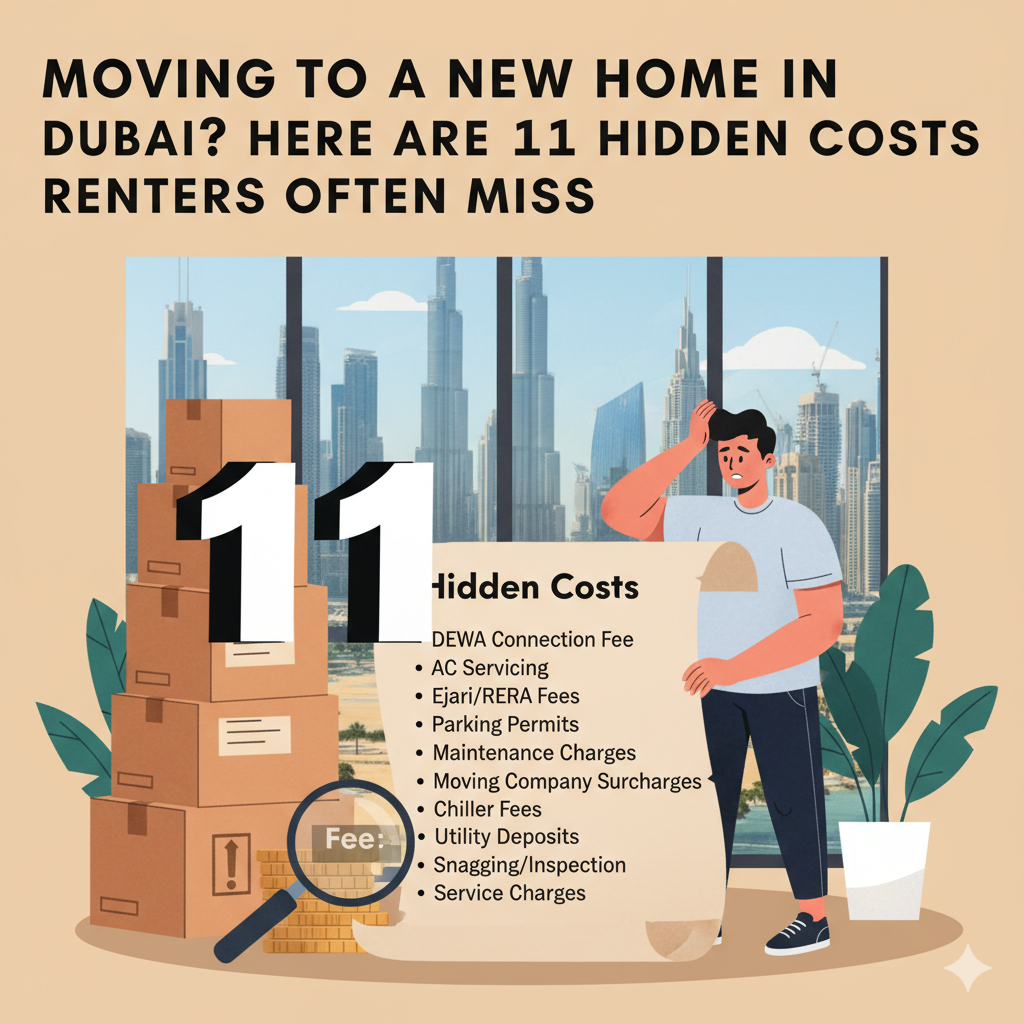
Dubai, UAE: Finding your ideal place to rent can be exciting, but what catches many people by surprise are the extra costs beyond the monthly rent. From security deposits to utility setup, these additional expenses can add up quickly. If you’re planning to move into a new home in Dubai, here are 11 key costs you should know about so you can budget properly and avoid unexpected strain on your finances.
1. Security Deposit
Before you even receive the keys, you’ll likely need to pay a security deposit. It’s meant to cover damages or unpaid bills at the end of your lease. For unfurnished apartments, this usually works out to about 5% of the annual rent, while furnished apartments often require 10% or more. Make sure the lease states what condition the property should be in to get your deposit back—taking photos on move-in helps.
2. Real Estate Agent / Brokerage Commission
If you used a property agent to find your new home, plan for a commission fee. This is typically around 5% of the annual rent, paid upfront. Some agents may add VAT or other small service fees on top, so always confirm the total amount before signing anything.
3. Ejari Registration
Ejari is Dubai’s system for registering tenancy contracts. Legally required, the Ejari registration ensures that your lease is officially recorded with the Real Estate Regulatory Agency (RERA). The fee is modest (around AED 200-250), but necessary—having Ejari is often a prerequisite for setting up utilities, visa processes, or other services.
4. Utility Connection Fees (DEWA etc.)
Utilities like water and electricity need to be connected before you move in. This involves a refundable security deposit and non-refundable activation fees. For apartments, expect deposits of around AED 2,000, while villas could cost AED 4,000 or more. Activation or connection fees may vary, depending on provider and meter size. Always clarifying with DEWA or suppliers beforehand helps.
5. Cooling / Chiller Charges
In many residential buildings, air conditioning or cooling may be handled by a central system (known as “district cooling” or “chiller”). Sometimes that cost is included; often it’s separate. If not included, you’ll likely have to pay a deposit or setup fee plus monthly running costs. In high-rise or luxury buildings, cooling expenses can become particularly noticeable.
6. Housing Fee (Municipality Fee)
Dubai imposes a housing fee equivalent to about 5% of your yearly rent, spread over 12 monthly instalments. You’ll often see it added to utility bills. Though it’s not always top of mind for renters, it’s a recurring cost that can significantly affect your monthly outlay.
Depending on your building or community, features like swimming pools, gyms, parking, security, shared landscaping, or common area maintenance might cost extra. Sometimes these are included; sometimes tenants must pay separately fees or deposits for cards/access. If your building is well-equipped, double check what’s included—and what’s not—to avoid surprises.
8. Internet, TV, and Telecom Setup
Getting internet, TV, phone, or streaming services sorted involves both installation fees and occasionally hardware or router deposits. If you’re switching providers when you move, there may be a relocation charge or setup fee. Budget a few hundred dirhams for equipment and activation, especially if your area requires new cabling or set-up.
9. Movers, Packing and Miscellaneous Moving Costs
Moving itself costs. Transporting your furniture and possessions with packers/movers, potential insurance for damage, possibly storage if there’s delay, or even cleaning fees for your current home—all these add up. For a modest apartment, moving costs might be a few hundred to a few thousand dirhams, depending on distance and services required.
10. Deep Cleaning & Pest Control
Before or after moving in, you may want to schedule deep cleaning, painting, or even pest control, especially if the previous tenant left things in poor condition. Sometimes landlords handle it, sometimes renters are expected to cover basic clean-ups. Confirm what the unit looks like pre-handover to know what you might need to arrange.
11. Parking & Access Card
Even if your rent includes one parking space, adding additional parking spots often comes with extra fees. Also, many buildings require access or security cards (for building entrances, parking gates, amenities). Losing these cards sometimes means paying a replacement fee. Be sure to check what’s included in your tenancy and whether extra cards cost anything.
Tips to Avoid Getting Caught Off Guard
- Read your tenancy contract carefully: look for clauses that specify which extras you're responsible for and what deposits are refundable.
- Get everything documented: photograph the state of the property when you receive the keys to avoid disputes over the security deposit later.
- Ask what’s included: clarify which amenities are free and which ones have separate fees.
- Budget for the first few months: your initial move-in month will often be more expensive than subsequent months due to all upfront setup fees.
- Negotiate where possible: sometimes you can negotiate agent fees, move-in dates (to avoid overlapping rent), or payment schedules.
Conclusion
When renting in Dubai, the monthly rent is just the beginning. All these extra costs—from security deposits to utility connections, chiller fees, agency commissions, housing fees, and more—can significantly increase your first month’s expenses. Planning ahead can help you avoid unpleasant surprises and ensure a smoother move into your new home.