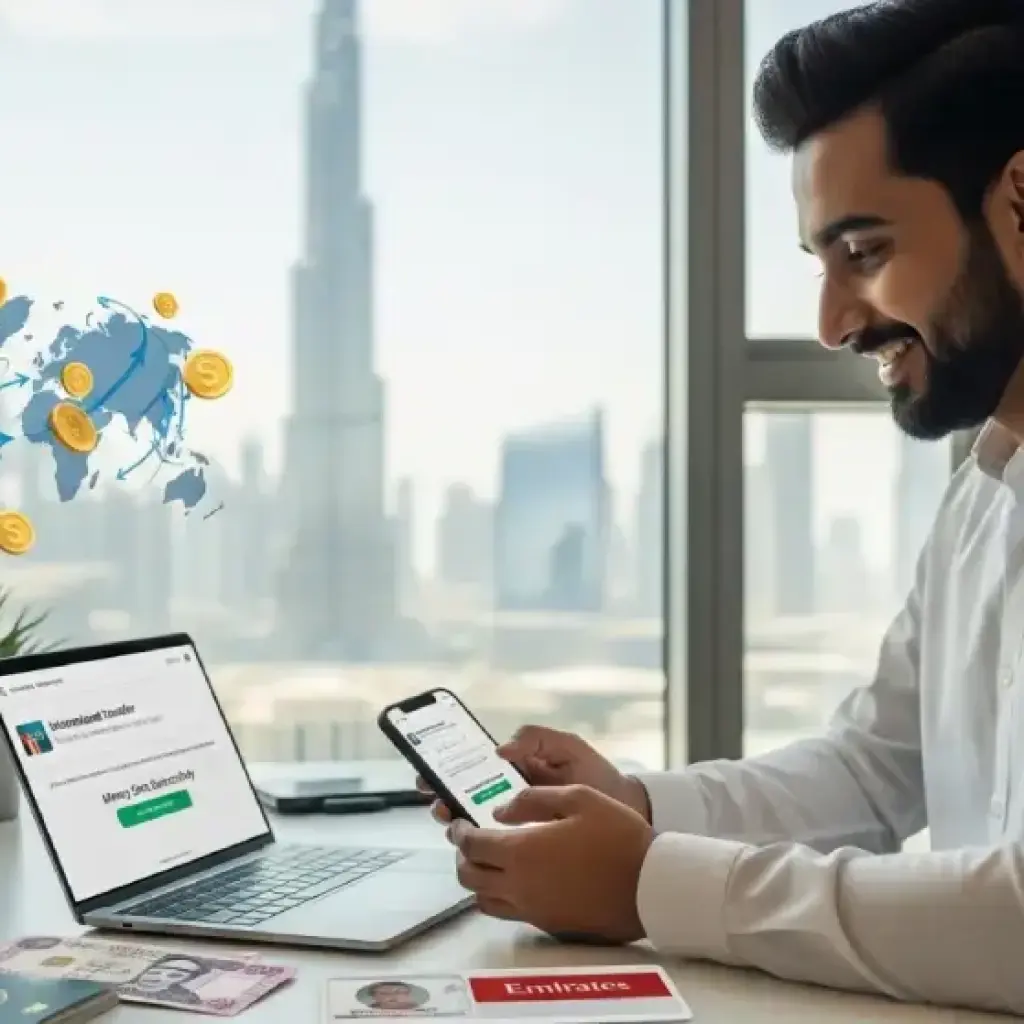
For millions of expats living in the UAE, sending money home is part of life. Whether it’s supporting family, paying for education, or managing investments, international transfers are a monthly ritual. But with rising global fees, fluctuating exchange rates, and hidden service charges, it’s easy to lose more than you expect with every transaction.
Fortunately, technology and regulation changes in 2025 have made international money transfers faster, cheaper, and safer than ever before — if you know the right tools and tricks. In this guide, you’ll learn how to send money abroad from the UAE without high transfer fees, and how to ensure your hard-earned dirhams reach their destination efficiently.
1. Understanding How Money Transfer Fees Work
Before we explore the best options, it’s important to understand where those extra charges come from. Most transfer costs come from three main sources:
- Transfer Fee: A flat charge applied by banks or money exchange houses for processing the transaction
- Exchange Rate Margin: The hidden fee — the difference between the mid-market rate and the rate you’re given.
- Receiver Fees: Sometimes the recipient’s bank or service provider also deducts a small amount upon receipt.
Even a small difference in exchange rates (like 0.5%) can result in hundreds of dirhams lost each year. That’s why comparing total costs — not just the upfront fee — is key to saving money.
2. Why Traditional Banks Are No Longer the Best Option
While UAE banks are known for reliability, they are often the most expensive way to send money abroad. Here’s why:
- High service fees: Banks can charge anywhere between AED 25 to AED 100 per transfer.
- Poor exchange rates: The rate is usually 2–4% below the market rate.
- Slower delivery: Cross-border SWIFT transfers can take 2–5 business days.
In contrast, digital money transfer apps and exchange houses offer lower costs, faster processing, and transparent pricing — ideal for expats sending regular remittances.
3. The Best Ways to Send Money Abroad from the UAE (2025 Edition)
Let’s look at the most cost-effective and secure options available to UAE residents today.
a. Licensed Digital Transfer Apps
These platforms have changed how people move money globally. In 2025, the UAE Central Bank continues to regulate digital transfer providers, ensuring both security and convenience.
Popular low-fee apps include:
- Wise (TransferWise): Offers mid-market rates and transparent fee breakdowns.
- Revolut: Ideal for those who hold multi-currency accounts.
- Remitly: Great for fast family transfers with delivery tracking.
- Instarem & WorldRemit: Known for low-cost transfers and quick delivery.
Using these platforms can cut costs by up to 70% compared to traditional banks.
b. UAE Exchange Houses (Authorized by the Central Bank)
If you prefer in-person service, UAE’s major exchange houses are still strong contenders:
- Al Ansari Exchange
- Lulu Exchange
- Al Fardan Exchange
- Sharaf Exchange
Many now offer mobile apps or online portals, allowing you to send money without visiting a branch. Their fees are competitive, especially for high-volume transfers to India, Pakistan, the Philippines, and Egypt.
c. Bank-to-Wallet Transfers
In 2025, many banks and fintech providers in the UAE have partnered with mobile wallet systems abroad. This allows the recipient to get funds directly on their mobile app (like GCash, Paytm, or M-Pesa) — often in minutes, not days.
This method avoids intermediary bank charges and gives instant access to funds.
4. Comparing Costs and Speed: What You Should Check
Before making a transfer, always compare:
- Exchange Rate – Look for the mid-market rate and how much margin the provider adds.
- Transfer Fee – Fixed cost for each transaction (can vary based on amount or destination).
- Delivery Speed – Some transfers take minutes, others days.
- Payment Method – Credit card payments may include extra fees compared to bank account transfers.
- Receiving Method – Direct bank deposits are cheaper than cash pickups.
Tip: Use comparison tools like Finder UAE, Monito, or MoneyTransfers.com to check which provider offers the lowest total cost in real-time.
5. Smart Tips to Reduce Transfer Costs
a. Avoid Weekend or Off-Hour Transfers
Exchange rates fluctuate constantly. Rates are usually less favorable on weekends when markets close. Plan transfers mid-week to get better rates.
b. Send Larger Amounts Less Frequently
Many providers charge a flat fee per transaction. Consolidating your transfers (for example, monthly instead of weekly) can reduce total costs.
c. Use AED Instead of Foreign Currency
When sending from UAE, always start the transfer in AED — not USD or EUR — to avoid double conversion fees.
d. Watch for Hidden Exchange Markups
A “zero-fee” offer often hides a poor exchange rate. Always compare the total amount your recipient will receive.
e. Consider Local Partnerships
Many UAE exchange houses partner with banks in India, Pakistan, and the Philippines. Using these partnerships often gives preferential rates and instant transfers.
6. How Digital Transfers Are Becoming Safer in 2025
Security is a top concern when moving money internationally. The UAE has implemented strict fintech regulations to protect senders and receivers.
- Central Bank Licensing: All digital remittance platforms must hold valid UAE Central Bank approval.
- Two-Factor Authentication (2FA): Protects users during online logins and transactions.
- Encrypted Transfers: Ensures your personal and financial data remain secure.
- Instant Status Tracking: You can now track every stage of your transfer via SMS or app notifications.
These safety measures make online transfers in 2025 as secure as — or even safer than — bank transfers.
7. Common Mistakes to Avoid When Sending Money Abroad
Even with the best tools, many expats still lose money due to small oversights. Avoid these mistakes:
- Using credit cards for transfers: They come with high processing and cash-advance fees.
- Ignoring exchange rates: Even a small difference can cost you hundreds yearly.
- Not verifying receiver details: One wrong account digit can delay or cancel your transfer.
- Falling for unlicensed operators: Always use UAE Central Bank–approved services only.
- Missing document updates: If your Emirates ID or residency is expired, your transfer may be blocked.
8. UAE Laws and Regulations You Should Know (2025 Updates)
In 2025, the UAE Central Bank continues to tighten oversight to ensure anti–money laundering (AML) compliance. Key regulations include:
- Know Your Customer (KYC): You must verify your identity with valid Emirates ID and residency.
- Licensed Transfer Channels Only: Using unregistered apps or agents is illegal.
- Transaction Limits: Large transfers (usually above AED 55,000) may require proof of source of funds.
Staying compliant ensures smooth transactions and avoids delays or fines.
9. Real-Life Example: Saving on Fees
Let’s say you send AED 3,000 monthly to India.
- Through a traditional bank: average total cost = AED 70 (fees + poor rate).
- Through Wise or Al Ansari app: total cost = AED 15–20.
That’s over AED 600 saved per year — just by switching providers.
When you multiply that across years or multiple family members, the savings are significant.
10. The Future of Cross-Border Transfers in the UAE
By 2025, the UAE is leading the Middle East’s fintech innovation. Blockchain-based remittance systems, AI-powered rate prediction tools, and instant settlements via QR-based payments are already being tested.
Soon, transferring money abroad could be as easy as sending a WhatsApp message — with near-zero fees and real-time settlement.
Conclusion: Keep More of What You Earn
Sending money abroad from the UAE doesn’t have to be expensive or complicated. By switching from traditional banks to licensed digital apps or trusted exchange houses, you can save hundreds of dirhams each year, transfer faster, and enjoy transparent service.
In 2025, smart expats are not just sending money — they’re managing it wisely.
So before your next transfer, take a few minutes to compare rates, check for hidden fees, and choose the method that helps you keep more of your hard-earned money where it belongs — with your loved ones.