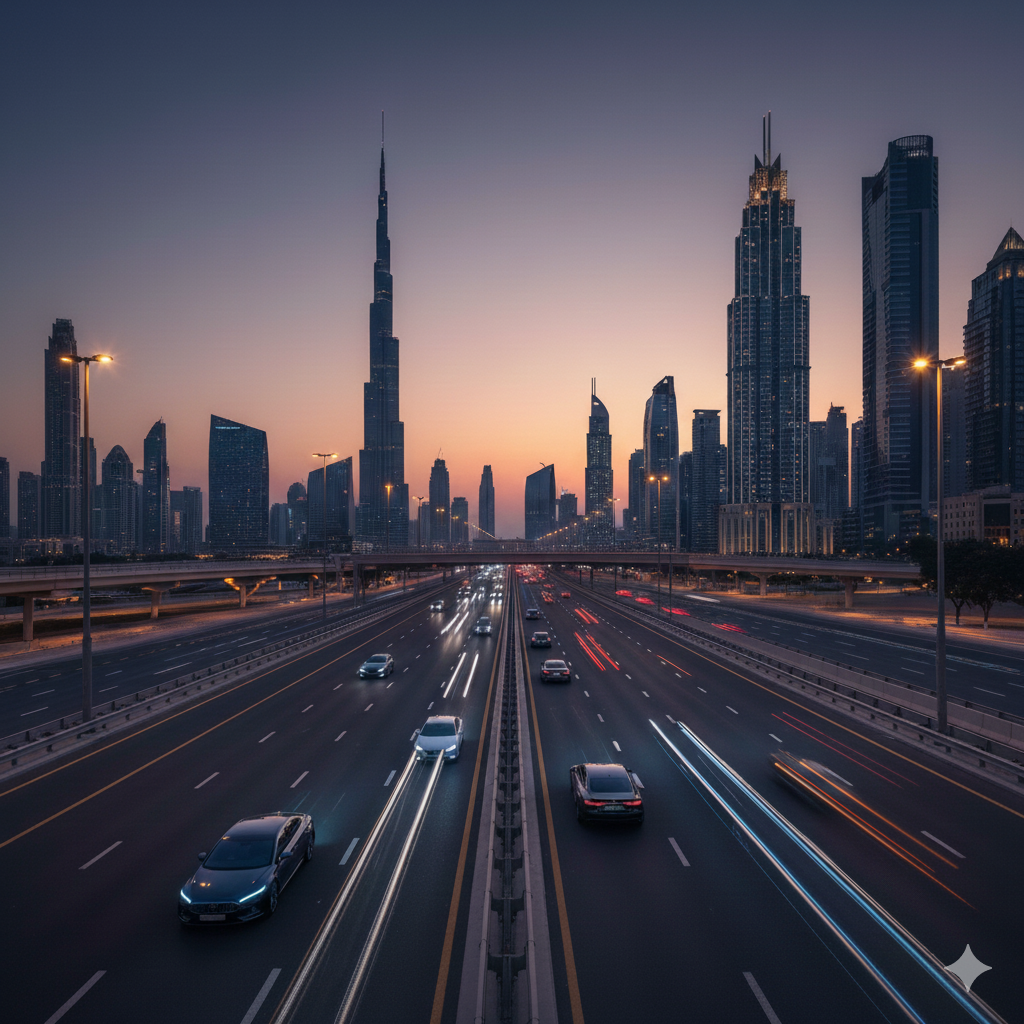
The UAE has rolled out significant changes to its traffic laws that directly impact everyone driving on Emirates roads. Whether you're a long-time resident, expat, or new driver, staying updated on these regulations can save you from hefty fines and keep you safe.
This guide covers the most important UAE traffic laws changes residents must know right now. We'll break down the new speed limit modifications that vary across different emirates, plus the enhanced penalties that could seriously impact your wallet if you're not careful. You'll also learn about the updated vehicle registration requirements and how the new digital traffic management systems are changing the way violations are tracked and processed.
Highway speed limits across the UAE have undergone significant adjustments, with most major expressways now enforcing stricter regulations. The Sheikh Zayed Road speed limit has been standardized at 100 km/h throughout most sections, eliminating the previous 120 km/h zones that existed in certain stretches. Dubai-Al Ain Road now maintains a consistent 120 km/h limit with zero tolerance for exceeding 140 km/h, resulting in immediate vehicle impoundment for 30 days.
Abu Dhabi's highway network has introduced variable speed limits based on traffic conditions and weather. During peak hours, speed limits automatically reduce by 20 km/h on major arteries like Sheikh Khalifa Highway. The penalty structure now includes:
Exceeding speed limit by 21-30 km/h: AED 600 fine and 4 black points
Exceeding by 31-40 km/h: AED 1,000 fine and 6 black points
Exceeding by 41+ km/h: AED 2,000 fine, 12 black points, and 30-day vehicle impoundment
Residential Area Speed Changes Affecting Daily Commutes
Residential zones across all emirates now enforce a uniform 40 km/h speed limit, reduced from the previous 60 km/h in many areas. Dubai's established neighborhoods like Jumeirah, Umm Suqeim, and Al Barsha have installed smart speed cameras that automatically adjust detection thresholds based on pedestrian activity levels.
Community areas within gated developments must maintain 20 km/h limits, with additional restrictions during school pickup and drop-off times. Speed bumps have been strategically placed every 200 meters in high-density residential areas, requiring drivers to maintain consistent slower speeds rather than accelerating between zones.
School Zone Speed Enforcement Updates
School zones now operate under enhanced safety protocols with speed limits reduced to 25 km/h during active hours (7:00 AM - 8:30 AM and 1:00 PM - 3:30 PM). These restrictions apply within a 500-meter radius of school entrances and include:
Automated speed detection systems that activate only during school hours
Double penalties for violations during active periods
Mandatory 15-day driving course completion for repeat offenders
Real-time alerts sent to registered parents when violations occur near their child's school
Weekend and holiday enforcement remains active around schools offering extracurricular activities or summer programs.
Commercial Vehicle Speed Limit Adjustments
Heavy commercial vehicles and trucks now face differentiated speed restrictions designed to improve overall road safety. Vehicles exceeding 3.5 tons must observe reduced limits:
Vehicle Type
Highway Limit
Urban Limit
Residential Limit
Light Commercial (3.5-7.5 tons)
90 km/h
50 km/h
30 km/h
Heavy Trucks (7.5+ tons)
80 km/h
40 km/h
25 km/h
Hazardous Materials
70 km/h
35 km/h
20 km/h
Commercial vehicles must install government-approved speed monitoring devices that transmit real-time data to traffic authorities. Companies face additional corporate penalties when their fleet vehicles accumulate multiple violations, including temporary operating license suspension and mandatory driver retraining programs.
Increased fines for mobile phone usage while driving
Using your phone behind the wheel just became significantly more expensive in the UAE. The updated traffic regulations now impose a hefty AED 800 fine for any form of mobile device usage while driving, representing a substantial increase from previous penalties. This includes making calls, texting, browsing social media, taking photos, or even holding your device in your hand while the vehicle is in motion.
The enforcement has become more sophisticated too. Traffic authorities now use advanced camera systems that can detect drivers holding phones from multiple angles. These cameras capture high-resolution images that clearly show the violation, making it nearly impossible to contest legitimate citations.
What many drivers don't realize is that the penalty extends beyond just talking on the phone. Adjusting your GPS, selecting music, or checking notifications all fall under this violation. The only acceptable use is hands-free operation through Bluetooth or mounted devices, but even then, your phone should be positioned where it doesn't obstruct your view or require you to take your hands off the steering wheel.
Repeat offenders face escalating consequences. A second violation within six months can result in vehicle impoundment for seven days, while a third offense may lead to a 30-day impoundment period plus additional court proceedings.
Stricter consequences for reckless driving behaviors
Reckless driving penalties have been completely overhauled, with authorities taking a zero-tolerance approach to dangerous behaviors on UAE roads. The new framework categorizes reckless driving into different severity levels, each carrying progressively harsher punishments.
Aggressive lane changing, tailgating, and excessive speeding now result in immediate fines ranging from AED 2,000 to AED 5,000, depending on the severity and location of the offense. Highway violations typically carry higher penalties due to the increased danger they pose to other motorists.
The most significant change involves street racing and showing off behaviors. Getting caught participating in illegal racing activities now results in an automatic AED 50,000 fine, immediate vehicle confiscation for 60 days, and a mandatory court appearance. The vehicle owner remains liable even if they weren't driving, creating accountability for lending cars to irresponsible drivers.
Dangerous overtaking, particularly on single-lane roads or in construction zones, triggers an AED 3,000 fine plus four black points. The penalty doubles if the violation occurs near schools, hospitals, or residential areas during peak hours.
Traffic police now use unmarked vehicles equipped with advanced recording equipment to catch reckless drivers who might otherwise modify their behavior when they spot marked patrol cars.
New penalty structure for parking violations
The parking violation system received a complete makeover, introducing dynamic pricing based on location, time, and frequency of violations. Premium zones like Dubai Marina, Downtown Dubai, and Abu Dhabi Corniche now carry parking fines starting at AED 300 for the first hour of overstaying.
Double parking, which previously carried a standard fine, now results in penalties ranging from AED 500 to AED 1,200 depending on the area and whether the violation blocks traffic flow or emergency vehicle access. Shopping mall violations during weekend peak hours carry the highest penalties within this category.
Parking in disabled spaces without proper permits now results in an immediate AED 1,000 fine plus community service hours. The violation also goes on a permanent record that affects future license renewals and vehicle registrations.
A new "repeat offender" category applies to drivers who accumulate more than five parking violations within 30 days. These drivers face escalating fines that can reach AED 2,000 per violation, plus potential vehicle impoundment for persistent violators.
The system now includes real-time monitoring in major commercial districts. Smart sensors detect unauthorized parking and automatically generate citations, eliminating the need for physical ticket placement and reducing disputes over timing.
Mandatory Safety Equipment Updates for All Vehicles
Vehicle owners across the UAE must now ensure their cars meet upgraded safety equipment standards. The new regulations require all vehicles to have functioning LED daytime running lights, upgraded rear reflectors with enhanced visibility ratings, and improved tire pressure monitoring systems that alert drivers to dangerous pressure drops.
Emergency safety kits have become mandatory for all passenger vehicles. These kits must include a first aid box meeting international standards, emergency warning triangles with reflective surfaces, fire extinguishers rated for automotive use, and high-visibility safety vests for all occupants. Commercial vehicles face additional requirements including GPS tracking systems and advanced braking assistance technology.
New Child Passenger Safety Requirements
Parents and caregivers face stricter rules when traveling with children. Kids under 4 years old must use age-appropriate car seats that meet ECE R44/04 or i-Size safety standards. Children between 4-8 years need booster seats, while those aged 8-12 must sit in the rear seats with proper seat belt positioning.
The regulations specify installation requirements too. Car seats must be professionally installed or certified through approved inspection centers. Rear-facing seats are mandatory for children under 15 months, and forward-facing seats require five-point harness systems until the child reaches specific height and weight thresholds.
Enhanced Regulations for Motorcycle and Bicycle Users
Motorcycle riders must now wear DOT or ECE-certified helmets at all times, with penalties for non-compliance reaching AED 1,000. Protective gear requirements extend to jackets with reflective strips, gloves, and closed-toe footwear. Motorcycles need upgraded lighting systems including auxiliary LED lights for better visibility during sandstorms.
Bicycle users aren't exempt from new safety measures. Cyclists must wear helmets on all public roads and designated cycling paths. Bikes require front and rear lights during low-light conditions, plus reflective clothing when riding after sunset. Electric bicycles face additional regulations including speed limiters and mandatory insurance coverage.
Updated Rules for Emergency Vehicle Right-of-Way
Emergency vehicle protocols have become more stringent with clear penalties for violations. Drivers must create emergency corridors by moving to the rightmost lane when ambulances, fire trucks, or police vehicles approach with active sirens and lights. Failing to yield can result in AED 3,000 fines plus license points.
The new rules specify exact procedures for different road types. On highways, vehicles in the left lane must move left while right-lane traffic moves right, creating a center corridor. City streets require immediate pulling to the nearest curb. Intersection protocols mandate complete stops until emergency vehicles pass safely.
Conclusion
The UAE has rolled out significant changes to its traffic laws that directly affect how residents drive, register vehicles, and navigate the roads. From new speed limits across different emirates to stricter penalties and updated registration processes, these modifications aim to create safer roads while embracing digital technology for better traffic management. The enhanced road safety regulations and digital systems show the country's commitment to reducing accidents and improving overall traffic flow.
These changes aren't just bureaucratic updates – they have real impacts on your daily commute and wallet. Make sure you're familiar with the new speed limits in your area and understand the updated penalty structure to avoid unexpected fines. Take time to review the new vehicle registration requirements and get comfortable with the digital traffic management systems that are being implemented. Staying informed about these changes will help you drive safely, avoid penalties, and make the most of the improved traffic infrastructure the UAE is building for its residents.
Football fans in the UAE and across the Middle East are gearing up for the biggest FIFA World Cup ever. Here's everything you need to know about watching all 104 matches live, streaming options, subscription packages, match timings, and coverage across the region.
The UAE is expected to witness a hot and dusty weekend with temperatures reaching 42°C in inland regions. Strong winds, hazy conditions, and blowing dust are forecast across several parts of the country through Monday.
The UAE is witnessing major updates this May, including AI-based work permit screening, new banking communication rules, resumed regional flights, enhanced traveller protections, attraction closures, and a possible six-day Eid Al Adha holiday for residents.