Nvidia Weighs Removing CEO Jensen Huang as Board Reviews Affair and Espionage Claims
AI Chip Giant Faces Leadership Uncertainty After CEO Admits Infidelity and Foreign Intelligence Allegations.



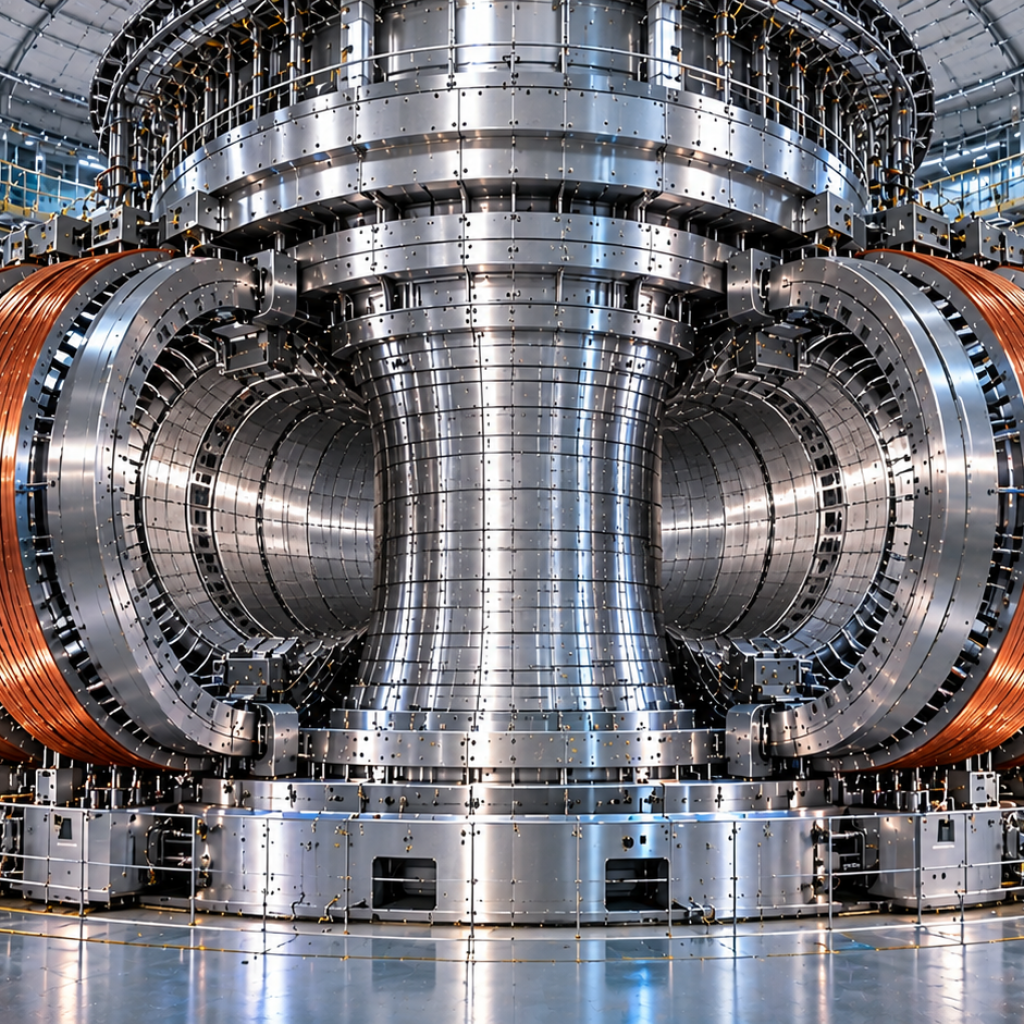
Iran says it is building its first homegrown nuclear fusion reactor using tokamak technology. Mohammad Eslami said Iranian scientists have made significant progress, but the reactor’s capacity, location, cost and commissioning date have not been disclosed.
The head of the Atomic Energy Organisation of Iran, Mohammad Eslami, revealed the project during a televised interview on Sunday. He described it as proof that the country can stand alongside technologically advanced nations.
A Reactor Built on Local Expertise
Eslami stressed that the project relies on domestic knowledge from start to finish. “We hope to bring the first Iranian tokamak, built entirely with domestic expertise, into operation according to the planned schedule,” Eslami said in a televised interview.
He presented the work as evidence of what Iranian researchers can achieve, a claim reported by state media. Iranian officials often highlight self-reliance in science and technology, and this announcement fits that pattern.
Table of contents [Show]
A tokamak is a device that uses powerful magnetic fields to confine extremely hot plasma inside a doughnut-shaped chamber. The magnetic confinement keeps the plasma away from the chamber walls so that nuclear fusion can take place.
The word “tokamak” comes from a Russian acronym, and the design was developed in the Soviet Union in the 1950s. It remains the most widely studied approach to magnetic confinement fusion.
The conditions inside are extreme. The core of the Sun is around 15 million degrees Celsius, and fusion devices on Earth must heat plasma to well over 100 million degrees Celsius to achieve fusion.
Conventional nuclear fission reactors produce energy by splitting heavy atomic nuclei. Fusion works in the opposite way, releasing energy by joining lighter nuclei together.
Most fusion research focuses on two heavy forms of hydrogen, deuterium and tritium. Deuterium can be extracted from seawater, which is one reason scientists see fusion as a potential source of large amounts of low carbon energy.
Producing electricity this way on a commercial scale remains a major technical challenge. Fusion has yet to become a widely established source of power anywhere in the world.
Several major projects show how difficult and expensive the field is. ITER, under construction in southern France, is an international tokamak project involving 35 nations, including the European Union, China, India, Japan, South Korea, Russia and the United States.
In December 2022, the National Ignition Facility in the United States achieved fusion ignition for the first time, producing more energy from a fusion reaction than the laser energy used to trigger it. That experiment used a different method, laser driven inertial confinement, rather than a tokamak.
The Joint European Torus in the United Kingdom set a record in 2023 by producing 69 megajoules of fusion energy in a single experiment before it was shut down. In January 2025, China’s EAST tokamak maintained a high temperature plasma for 1,066 seconds, a long duration record at that time.
These results show real progress, yet no device has delivered continuous, grid scale electricity from fusion.
Eslami did not reveal how much power the reactor is expected to generate, where it will be built, how much it will cost or when it is likely to enter service. Without those details, it is not possible to judge the scale or ambition of the project, or how it compares with research tokamaks operating elsewhere.
Nuclear fusion is separate from Iran’s existing uranium enrichment programme, which relates to fission technology. Developing a tokamak does not, by itself, demonstrate progress toward producing a nuclear weapon, because it belongs to a distinct field of scientific and energy research.
For now, the announcement is a statement of intent backed by few technical specifics. Further details on timelines and design are likely to determine how the project is viewed internationally.
Source: Gulf News